
Few travel experiences rival gliding through alpine meadows, curving around granite cliffs on soaring viaducts, and cresting snowbound mountain passes from the comfort of a panoramic train carriage. Switzerland operates one of the most punctual, seamlessly coordinated transit networks on earth, making an extensive alpine rail journey remarkably accessible without renting a car.
However, turning a romantic rail dream into a stress-free six-day journey requires realistic pacing. Running across multiple mountain chains involves navigating separate railway operators, changing rail gauges, booking mandatory panorama reservations, and managing mountain luggage logistics.

This tested six-day itinerary traces a classic grand loop through the Swiss Alps: departing Zurich or Lucerne through the Bernese Oberland, crossing into the French-speaking Vaud Riviera via the GoldenPass Express, climbing to Zermatt beneath the Matterhorn, crossing the southern Alps on the legendary Glacier Express, and finishing along the UNESCO-recognized Bernina corridor.
Rail Essentials: Passes, Reservations, and Luggage Logistics
Before boarding your first departure, you need to understand how Swiss ticketing works in practice.
The All-in-One Transit Solution
For this specific route, purchasing a 6-day Swiss Travel Pass through Swiss Federal Railways (SBB) is the most efficient choice for visitors residing outside Switzerland and Liechtenstein. It offers unlimited travel across national rail, postal bus, lake steamer, and urban tram networks, and provides entry to hundreds of museums.
Crucially for an alpine itinerary, the pass completely covers mainline transit and standard panoramic route fares, while granting discounts—ranging from 25% to 50%—on private mountain cogwheels and cable cars. Keep your physical passport on hand throughout your journey; SBB inspectors require official physical identification alongside digital pass barcodes, and photos or screenshots of passports are not accepted.
Scenic Seat Reservations vs. Standard Rail
While standard Swiss intercity trains do not require advance seat reservations, scenic panoramic expresses carry strict reservation policies:
- Glacier Express: Boarding the official panoramic carriages requires a mandatory paid seat reservation (standard class fees start at CHF 54), which can be booked up to 93 days in advance on the official Glacier Express booking portal. Note that the train takes an annual scheduled maintenance break between mid-October and mid-December.
- Bernina Express: Traveling in designated panoramic cars requires a paid seat reservation via the Rhaetian Railway (RhB) portal. Alternatively, regular regional RhB trains operate along the identical UNESCO World Heritage tracks hourly with openable windows and require no reservation supplement.
- GoldenPass Express: Operated by Montreux Oberland Bernois (MOB), this route links Interlaken Ost and Montreux directly. Swiss Travel Pass holders travel without an extra ticket, though booking an advance seat reservation is recommended during peak summer and autumn seasons.
Managing Luggage Across Tight Connections
Swiss train transfers can be as brief as four to eight minutes. While stations feature ramps and elevators, hauling oversized suitcases through tight platforms can make connections stressful. Travel with a manageable rolling bag or backpack. Larger stations (such as Zurich HB, Interlaken Ost, Brig, and St. Moritz) offer secure coin- and app-operated luggage lockers if you want to explore hands-free during a mid-day layover.
Day 1: Lucerne to the Bernese Oberland (Interlaken & Lauterbrunnen)
Morning: Lakeside Departure
Begin your morning at Zurich Hauptbahnhof or Lucerne. Board the Zentralbahn Luzern-Interlaken Express, which winds along the turquoise waters of Lake Alpnach and Lake Lungern before climbing up the Brünig Pass. Settle into the right side of the train for the most expansive lake views.
Arrive at Interlaken Ost approximately two hours later. Interlaken serves as the gateway junction between the two Bernese lakes (Thun and Brienz) and the high peaks of the Jungfrau region.
Afternoon: The Valley of 72 Waterfalls
From Interlaken Ost, take the 20-minute regional connecting train up the valley into Lauterbrunnen. Flanked by vertical limestone cliffs, Lauterbrunnen feels carved from fantasy. Walk the flat valley floor path to Staubbach Falls, which cascades nearly 300 meters down a sheer rock face.
If time permits, continue by local postbus or a scenic 45-minute stroll toward Trümmelbach Falls, a series of glacier-fed subterranean waterfalls cutting through the rock interior (open seasonally).
Evening: Alpine Hospitality
Check into your accommodation in Lauterbrunnen, Wengen, or Grindelwald. Enjoy traditional Bernese rösti (pan-fried grated potatoes topped with alpine cheese) in a local guesthouse, and rest early in preparation for a high-altitude climb tomorrow.
Day 2: Jungfraujoch or Schilthorn and the High Peaks
Morning: Ascent to the Top of Europe
Depart early from Lauterbrunnen or Grindelwald toward Europe's highest railway terminal at Jungfraujoch (3,454 m). You can take the state-of-the-art Eiger Express tricable gondola from the Grindelwald Terminal to Eigergletscher, cutting significant travel time, before transferring to the historic Jungfrau cogwheel train that tunnels directly through the Eiger rock wall.
Budget & Pass Consideration: The Swiss Travel Pass fully covers travel up to Grindelwald or Wengen, and provides a 25% discount on the remaining rail sector to Jungfraujoch. Seat reservations for the cogwheel train from Eigergletscher cost CHF 10 and are recommended on clear summer and peak mornings to avoid queuing.
At the summit, step out onto the Sphinx Observation Terrace for sweeping vistas over the 23-kilometer Great Aletsch Glacier, the longest ice stream in the Alps.
Afternoon: Mürren Ridge Walk or Grindelwald Valley
Descend back toward Kleine Scheidegg. If you prefer an alternative to Jungfraujoch or wish to avoid higher supplemental fares, spend your afternoon taking the cable car from Stechelberg up to Gimmelwald and car-free Mürren, located on the opposite cliff face of Lauterbrunnen. The cliff-edge walk between Mürren and Grütschalp offers uninterrupted panoramas of the Eiger, Mönch, and Jungfrau peaks with virtually no technical hiking required.
Evening: Sunset by the Valley Streams
Return to Interlaken or your valley base. Grab a quiet dinner along the Aare River, and pack your luggage tonight so you are ready for a morning cross-country journey.
Day 3: GoldenPass Express to the Riviera, then Onward to Zermatt
Morning: Rolling from Alpine Meadows to Vineyards
Board the morning departure of the MOB GoldenPass Express at Interlaken Ost. This remarkable engineering feat features variable-gauge bogies that switch tracks seamlessly between standard gauge and metre gauge in Zweisimmen without requiring passengers to change trains.
The train climbs past traditional wooden chalets in Gstaad and traverses the Pays-d'Enhaut before descending steeply toward Lake Geneva. As you round the final mountain tunnels above Montreux, terraced hillsides, palm trees, and the blue expanse of Lake Geneva open before you.

Afternoon: Lakeside Castle and the Rhône Valley
Disembark at Montreux around midday. Take a 15-minute lakeside promenade or catch the local bus to the historic Château de Chillon, an island fortress resting at the water's edge.
After a lakeside lunch, board a Swiss Federal Railways intercity train heading east along the Rhône Valley through Martigny and Sion to the rail hub of Visp. At Visp, transition to the red narrow-gauge Matterhorn Gotthard Bahn cogwheel train, which ascends through steep ravines into the car-free mountain village of Zermatt.
Evening: First Look at the Matterhorn
Arrive in Zermatt, where no combustion engines are permitted—only quiet electric hotel buggies and horse carriages navigate the narrow streets. Walk to the Kirchbrücke (church bridge) at dusk for your first unobstructed view of the Matterhorn's pyramid peak.
Day 4: Zermatt, the Gornergrat Cogwheel, and High Alpine Trails
Morning: Cogwheel to Gornergrat (3,089 m)
Directly across from the main Zermatt rail station, board the open-air cogwheel Gornergrat Railway. Over 33 minutes, the train scales sheer slopes, passing pine forests and alpine lakes to reach the Gornergrat summit station at 3,089 meters.
From the observation platform, you are surrounded by 29 distinct 4,000-meter peaks, including the Dufourspitze (Switzerland’s highest point) and the Gorner Glacier. Swiss Travel Pass holders receive a 50% discount on Gornergrat cogwheel tickets.
Afternoon: The Riffelsee Reflection Walk
Take the train down one stop to Rotenboden, then take the gentle 10-minute downhill walk to the Riffelsee. On calm, windless mornings and early afternoons, the lake surface forms a mirror reflection of the Matterhorn. Continue walking downhill along marked alpine trails to Riffelberg (approximately 45 minutes) before re-boarding the cogwheel train back to Zermatt.
Spend your late afternoon strolling through Hinterdorf, Zermatt’s oldest quarter, where historic wooden barns built on stone discs (designed to deter mice) have stood since the 16th century.
Evening: Valais Fondue and Tomorrow’s Preparations
Enjoy a classic Valais cheese fondue paired with local Fendant white wine. Because tomorrow’s rail journey spans nearly eight hours, pick up provisions, water, and snacks at a local market this evening.
Day 5: The Iconic Glacier Express from Zermatt to St. Moritz
All-Day Journey: The World's Slowest Express Train
Today is dedicated to the ultimate scenic rail crossing: the Glacier Express. Departing Zermatt station in the morning, the train travels roughly 291 kilometers across 291 bridges and through 91 tunnels, linking the Valais with the Graubünden region.
Journey Highlights & Altitude Milestones:
* Zermatt departure (1,608 m)
* Descending through the Matter Valley to Brig
* Climbing through the Furka Base Tunnel
* Cresting Oberalp Pass at the highest track point (2,033 m)
* Sweeping descent into Disentis (engine change)
* Carving through the Ruinaulta (the "Swiss Grand Canyon" Rhine Gorge)
* Crossing the Landwasser Viaduct directly into a sheer cliff tunnel
* Arrival in St. Moritz (1,775 m)
Service Details and Seasonal Planning
The panoramic carriages feature oversized glass windows stretching into the curved ceiling, providing continuous sightlines of passing granite walls, glaciers, and river gorges. Hot multi-course lunches can be served directly at your seat if pre-ordered during booking.
Important Operational Note: If your trip falls between mid-October and early December when the Glacier Express undergoes its annual service shutdown, you do not need to abandon this route. Regular regional Matterhorn Gotthard Bahn and RhB trains operate along these exact tracks throughout the entire year. You will need to change trains two or three times (typically at Disentis/Mustér and Reichenau-Tamins), but no seat reservations are required, and the scenery is completely identical.

Evening: Arrival in the Engadin Valley
Arrive in St. Moritz in the late afternoon. Walk along Lake St. Moritz or explore the upper village (Dorf) before settling in for a restorative dinner featuring traditional Engadin nut tart (Bündner Nusstorte).
Day 6: The UNESCO Bernina Corridor to Tirano
Morning: Across the Bernina Pass
For your final full rail day, board the Bernina Express operated by the Rhaetian Railway (RhB) at St. Moritz or nearby Pontresina. This engineering masterpiece is recognized worldwide as a UNESCO World Heritage rail line.
The train climbs past the dramatic Morteratsch Glacier up to Ospizio Bernina, the highest point of the line at 2,253 meters above sea level. Here, milky glacial waters from Lago Bianco contrast against stark alpine rock faces.
Afternoon: Spiraling Down to Italian Palm Trees
Leaving the pass, the railway begins a steep descent of over 1,800 vertical meters without using any cogwheels. The train snakes down through Alp Grüm, offering vistas into the Val Poschiavo, before executing a full 360-degree loop over the famous open-air stone Brusio Spiral Viaduct.
Within two hours of high-altitude glaciers, you cross the international border into Tirano, Italy, surrounded by vineyards and palm trees. Step off the train to enjoy authentic Italian espresso, fresh pizza, or pasta in the town square.
Border Reminder: Because Tirano is located in Italy, carry your original passport with you for border inspections.
Evening: Return to Zurich or Milan
From Tirano, you have two convenient options to complete your itinerary:
- Return via Graubünden: Re-board the regional RhB train back over the Bernina Pass to St. Moritz or Chur, connecting to an SBB direct mainline train to Zurich Hauptbahnhof or Zurich Airport (ZRH).
- Continue South: Board a regional Italian Trenord train from Tirano south along the shore of Lake Como to Milan Centrale (approximately 2.5 hours).
Organizing Multi-Leg Train Schedules Without Spreadsheets
Coordinating a multi-segment journey through Switzerland involves keeping track of seat reservation dates, specific train carriage numbers, hotel check-in times, and mountain cableway connections across multiple valleys.
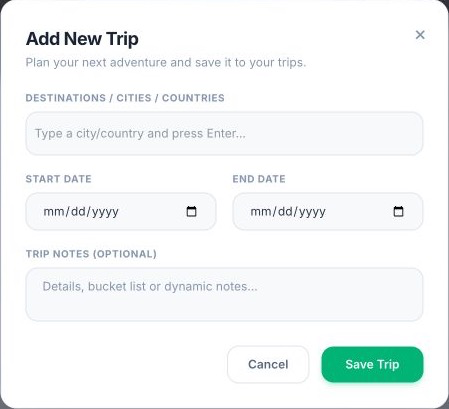
Rather than shuffling between confirmation emails and offline documents on a crowded platform, you can organize your daily activities, hotel details, and travel notes together in one clean interface using Suitcase2Go.
While our web itinerary guides are designed for reading and cannot be directly imported or saved with a single click, setting up your own trip on the platform gives you a clear space to log your booked train legs, keep notes on mountain transfer times, and map out your day-by-day plans. Learn more, see how it works, and sign up at Suitcase2Go.
Common Rail Mistakes and How to Avoid Them
- Assuming all trains require reservations: Aside from panoramic expresses (Glacier Express, Bernina Express panoramic cars, and specific Gotthard routes), normal Swiss trains do not require reservations. You simply step aboard with your valid Swiss Travel Pass.
- Forgetting mountain pass validity limits: The national Swiss Travel Pass does not give 100% free passage to every summit. Always check whether your mountain cogwheel or cable car is fully covered, discounted by 50% (like Gornergrat), or discounted by 25% (like upper Jungfraujoch).
- Underestimating weather volatility: High-altitude summits can be engulfed in cloud cover while valleys remain sunny. Check live webcams at station kiosks or on local tourism apps each morning before purchasing mountain supplements.
- Overpacking: Switching trains with heavy luggage across multiple intermediate stops is tiring. Opt for mid-size luggage that fits easily on overhead racks or behind seat rows without blocking aisles.