
South Korea's high-speed rail spine—the Gyeongbu Line—makes crossing the peninsula remarkably efficient. In just a single week, you can explore the dense modern neighborhoods and royal palaces of Seoul, wander among the thousand-year-old tumuli of ancient Silla in Gyeongju, and finish along the coastal bluffs and bustling fish markets of Busan.
Because KTX (Korea Train eXpress) trains hit speeds up to 300 km/h, moving between these distinct regions requires only brief segments on the rails rather than full travel days. However, turning this route into a smooth trip requires understanding local transit integration, station locations, and seat reservation timelines.

Here is an optimized, practical seven-day itinerary designed to minimize backtracking, provide realistic transit buffers, and highlight South Korea's cultural and coastal contrasts.
High-Speed Rail Essentials: How the Route Works
Before diving into the daily schedule, keep these foundational transit rules in mind:
- The Operating Line: All high-speed trains on this route run on the Gyeongbu High-Speed Line, operated by KORAIL.
- Seoul to Gyeongju: Takes roughly 2 hours to 2 hours 15 minutes by direct KTX departing from Seoul Station.
- Gyeongju to Busan: Takes approximately 30 to 35 minutes by direct KTX.
- Busan to Seoul: Takes roughly 2 hours 15 minutes to 2 hours 45 minutes on nonstop or limited-stop KTX runs back north.
- Station Clarity in Gyeongju: Gyeongju's high-speed station was formerly called Singyeongju Station. It has been officially renamed Gyeongju Station. It sits roughly 10 to 15 kilometers southwest of downtown, requiring a 15- to 25-minute local bus ride (such as bus lines 50, 51, 60, or 70) or taxi into the historic quarter.
- Booking Windows: Standard KTX seat tickets open for booking through the KORAIL English Booking Portal at 07:00 KST exactly one month prior to departure.
- Transit Cards: Pick up a rechargeable nationwide T-money Card at an airport convenience store upon arrival. While the regional Seoul Climate Card offers fixed-rate unlimited local subway and bus transit within Seoul, it does not function in Gyeongju or Busan and cannot be used on high-speed rail lines.
Day 1: Royal Seoul & Historic Alleys
Morning: Joseon Splendor at Gyeongbokgung
Start your trip at Gyeongbokgung Palace, the primary royal palace of the Joseon Dynasty. Arrive around 09:30 to explore the throne hall (Geunjeongjeon) and the floating pavilion (Gyeonghoeru). Time your visit to watch the Changing of the Royal Guard ceremony at the main gate (Gwanghwamun), which takes place at 10:00 and 14:00 (except Tuesdays, when the palace is closed).
Afternoon: Hanok Neighborhoods and Traditional Tea
Walk east toward Bukchon Hanok Village, a preserved residential neighborhood of traditional Korean tiled-roof homes. Because residents live here, keep noise levels low and observe designated tourist zones. From Bukchon, wander downhill through Samcheongdong’s small galleries into Insadong. Stop at a traditional wooden teahouse for roasted grain tea (misutgaru) or cold plum tea (maesilcha) paired with rice cakes.
Evening: Streamside Stroll and Gwangjang Market
As evening arrives, walk down to Cheonggyecheon Stream, an urban renewal canal sunken below street level. Follow the cool waters east directly into Gwangjang Market. Sit at an open-air food stall for dinner: order hand-ground mung bean pancakes (bindaetteok) fried crisp in shallow oil, followed by hand-cut noodle soup (kalguksu) or fresh seasoned beef tartare (yukhoe).
Day 2: Panoramic Vistas & Design Quarters
Morning: Namsan Park and N Seoul Tower
Take the morning cable car or catch an eco-bus up to Namsan Mountain. At the base of N Seoul Tower, you will find sweeping 360-degree views across the Han River basin and the city center. If you visit on a clear morning, you can see out to the granite peaks of Bukhansan National Park.
Afternoon: Myeongdong and the National Museum
Head down into Myeongdong for lunch—such as warm chicken broth noodles or dumpling soup—before riding subway Line 4 south to Ichon Station for the National Museum of Korea. Admission to the expansive main exhibition hall is free, showcasing bronze artifacts, Silla gold crowns, and historic porcelain. The museum offers quiet walking galleries and an unhurried perspective on Korean history.
Evening: Dongdaemun Design Plaza (DDP)
Ride the subway east to the futuristic curves of Dongdaemun Design Plaza (DDP), designed by Zaha Hadid. The illuminated silver aluminum panels and rooftop pathways are especially impressive after dark. Finish the night browsing Dongdaemun’s multi-story fashion wholesale markets or grab dinner nearby.
Day 3: Modern Energy & Packing for the Rails
Morning: Seongsu-dong Industrial Rebirth
Begin Day 3 in Seongsu-dong, Seoul’s former shoe-manufacturing district that has transformed into a center for independent design, local fashion studios, and concept bakeries. Walk through the converted brick warehouses along Yeonmujang-gil and visit Seoul Forest for an open green space along the river.
Afternoon: Hongdae & Yeonnam-dong
Cross town via subway Line 2 to the city's west side. Explore Yeonnam-dong and stroll along the Gyeongui Line Forest Park—a repurposed ground-level railway line lined with small cafes, bookstores, and boutique shops. Browse independent clothing stalls around Hongik University (Hongdae) and sample street snacks such as hotteok (brown sugar pancakes) and skewered chicken.
Evening: Preparation at Seoul Station
Keep your evening relaxed. Pack your bags to be manageable on train carriages, confirm your morning departure slot from Seoul Station, and ensure your T-money card has KRW balance loaded for your arrival in Gyeongju.
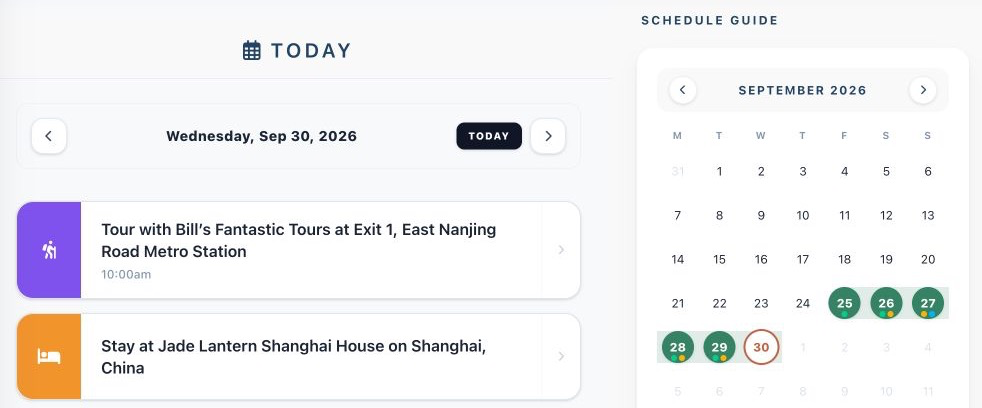
Suitcase2Go web app — demo data. Use digital itinerary platforms to keep train departures, daily activity blocks, and lodging bookings unified on one clean timeline.
Day 4: High-Speed KTX to Gyeongju — Silla Dynasty Heritage
Morning: KTX Departure Across the Peninsula
Board an early KTX train from Seoul Station (aim for a departure between 07:45 and 08:30). Settle into your seat on the Gyeongbu line as the train cruises past urban Daejeon and through the central mountain passes.
Arrive at Gyeongju Station in approximately 2 hours and 10 minutes. Head outside to the station bus stop and board city bus 50, 51, or 70 toward downtown and Hwangnam-dong (about 20 minutes), or take a local metered taxi directly to your lodging.
Afternoon: Royal Tumuli and Ancient Astronomers
Check in or drop your luggage near the historic center. Walk directly into Daereungwon Ancient Tomb Complex, an expansive park containing 23 giant grass-covered burial mounds of ancient Silla kings and queens. Visit the excavated interior of Cheonmachong (Tomb of the Heavenly Horse) to examine the burial chambers.
Stroll across the park lawn to Cheongseongdae, a 7th-century bottle-shaped stone tower recognized as the oldest surviving astronomical observatory in East Asia. From there, explore the surrounding wildflower fields.
Evening: Hwangnidan-gil and Donggung Palace Reflecting Pools
Spend your late afternoon wandering Hwangnidan-gil, where traditional low-rise hanok buildings house contemporary dining spots, craft breweries, and craft studios. Enjoy dinner featuring Gyeongju-style Korean set dining (hanjeongsik) or minced beef patties (tteokgalbi).
After twilight, take a 5-minute taxi to Donggung Palace and Wolji Pond (formerly known as Anapji). The secondary palace pavilions are illuminated from below, creating sharp mirror reflections across the dark surface of the royal pond.
Day 5: Mountain Sanctuaries & Onward to Coastal Busan
Morning: Bulguksa Temple and Seokguram Grotto
Wake early and catch local bus 10 or 11 from the express bus terminal or your downtown stop toward Mt. Tohamsan. Explore Bulguksa Temple, a UNESCO World Heritage site constructed during the golden age of Silla architecture. Walk up the stone staircases (Cheongungyo and Baegungyo) and admire the stone pagodas, Dabotap and Seokgatap.
If time permits, take the shuttle bus or taxi winding further up the mountain to Seokguram Grotto to view the monumental granite Buddha statue carved into a domed stone rotunda facing the East Sea.
Afternoon: The 35-Minute KTX Sprint to Busan
Return to downtown Gyeongju to retrieve your luggage, then head out to Gyeongju Station. Board an afternoon KTX south to Busan Station; the high-speed transit takes just 30 to 35 minutes.
Arriving in Busan, switch to subway Line 1 or hail a taxi to reach your hotel. If you prefer coastal morning views, base yourself in Haeundae or Gwangalli; if you prioritize transit convenience, staying near Seomyeon offers easy transfers across the Busan Metro network.
Evening: Gwangalli Beach & Gwangan Bridge Lights
End your day on the sands of Gwangalli Beach. The iconic diamond-shaped Gwangan Bridge stretches across the bay and lights up with an evening LED display. Walk the beach promenade and dine at a seaside restaurant serving grilled clams (jogae-gui) or fresh sliced raw fish (hoe).
Day 6: Coastal Busan & Cliffside Villages
Morning: Gamcheon Culture Village
Start your morning on the slopes of Saha-gu at Gamcheon Culture Village. Built into the steep hillside, this former refugee settlement was transformed into a colorful district with pastel houses, painted murals, and narrow alleyways. Arrive before 09:30 to wander the steps before midday group tours arrive.
Afternoon: Jagalchi Fish Market & Nampo-dong
Take a local bus or taxi down to Jagalchi Fish Market, Korea’s largest seafood market along the port. Walk past live-tank stalls operated by market vendors (Jagalchi Ajumma). You can purchase seafood on the ground floor to be prepared immediately in dining halls upstairs, or head across the street into BIFF Square to sample Busan's famous seed hotteok (ssiat hotteok).
Evening: Haeundae Blueline Park & Cheongsapo Pier
Head east to Haeundae and ride the Haeundae Blueline Park coastal train or Sky Capsule from Mipo station along the rocky coastline to Cheongsapo. The rail cars run high along the shoreline cliffs overlooking the Korea Strait. Enjoy dinner at a seafood grill near Cheongsapo’s twin lighthouses, then take an evening walk along Haeundae Beach's lit boardwalk.
Day 7: Clifftop Temple & The Return Rail Run
Morning: Haedong Yonggungsa Temple
Rise early to visit Haedong Yonggungsa, a rare coastal Buddhist temple built directly into jagged seaside rocks. Unlike most Korean temples tucked into mountain valleys, Yonggungsa faces crashing waves. Arrive around 08:00 to 08:30 to beat the midday crowds, watch the ocean spray against the stone dragons, and listen to the rhythmic chanting of the monks.
Afternoon: Coastal Lunch and Boarding the KTX
Head back toward central Busan for lunch. Warm up with a traditional bowl of Busan-style pork soup with rice (dwaeji gukbap), seasoned with salted shrimp and fermented bean paste.
Collect your bags and arrive at Busan Station at least 20 minutes before departure. Board the high-speed KTX for the return journey north to Seoul. In roughly 2 hours and 30 minutes, you will pull smoothly back into Seoul Station, putting you within easy reach of the airport railroad (AREX) to Incheon International Airport or your final hotel stay in the capital.

Logistics Comparison: KORAIL Pass vs. Point-to-Point Fares
Travelers often wonder whether purchasing an unlimited KORAIL Pass is cheaper than buying individual tickets. Here is how the two options compare for this specific 7-day route:
| Option | How It Works | Best For |
|---|---|---|
| Point-to-Point KTX Tickets | Purchased individually via the KORAIL English Booking Portal. Opens 1 month ahead. | Most standard 7-day itineraries. Because you only take three high-speed legs (Seoul→Gyeongju, Gyeongju→Busan, Busan→Seoul), single tickets frequently cost less than a multi-day pass. |
| KORAIL Pass (Select or Consecutive) | Offers unlimited rides within a 2-, 3-, 4-, or 5-day window, with up to 2 seat reservations per day. | Travelers adding extra high-speed day trips (such as Daejeon, Daegu, or Jeonju) within the same week. |
Note: KTX trains do not include city subways or local buses. Whichever rail option you choose, you will still need a rechargeable T-money Card to cover urban transit across Seoul, Gyeongju, and Busan.

Practical Packing and Luggage Rules on KTX
KTX trains are built for rapid intercity travel, but storage space can become competitive during peak Friday evening and Sunday departures:
- Overhead Racks: Standard carry-on rollaboards and backpacks fit easily onto overhead racks running above the seating rows.
- Carriage-End Storage: Larger suitcases (26 inches and above) must be placed in the dedicated open luggage racks located in the vestibules between train cars. Arrive at the platform 10 to 15 minutes before departure so you can claim luggage shelf space before the cars fill.
- Seat Comfort: Standard Class seats offer adequate legroom and footrests, but seats do not rotate manually. If you are sensitive to traveling backward, verify your seat direction when booking on the KORAIL portal.
Bringing Your Route Together
Coordinating a multi-city journey across three distinct regions requires balancing rail timetables, check-in windows, and neighborhood transit links. You can keep all your travel dates, confirmation notes, and daily plans structured in one place at Suitcase2Go. Use it to assemble your route, map your daily itineraries, and ensure every rail transfer connects cleanly from departure to arrival.