
Traveling between Lithuania, Latvia, and Estonia is one of the most cohesive overland journeys in Northern Europe. While the unified high-speed rail project across the region remains under multi-year construction, international passenger train travel across Baltic borders still involves disjointed regional transfers and extended connections. Instead, regional express coach lines form the backbone of cross-border transit between the capitals.
Modern express buses running between Vilnius, Riga, and Tallinn run frequently, offer dedicated workstations, power sockets, Wi-Fi, and onboard climate control, and drop passengers directly inside city centers. In one week, you can explore the baroque church spires of Vilnius, the Art Nouveau quarters and sprawling market halls of Riga, and the fortified medieval ramparts and seaside creative districts of Tallinn without renting a car or booking domestic flights.

Here is a practical, day-by-day 7-day itinerary for traveling northbound from Vilnius to Tallinn, complete with neighborhood groupings, transit logistics, and booking strategy.
Baltic Transit Overview: Express Coach Logistics
Before diving into daily touring, understanding how the intercity transit works makes booking straightforward. Two primary operators manage express connections between the three capital terminals:
- Lux Express Route Network: Operates modern coaches equipped with personal seatback entertainment screens, standard 220V power outlets, clean restrooms, free Wi-Fi, and complimentary self-serve hot drinks. They offer the highest departure frequencies on both the Vilnius–Riga and Riga–Tallinn corridors (up to 12–13 departures daily between Riga and Tallinn alone).
- ECOLINES International Bus Services: Operates long-distance Setra and Neoplan coaches on the same cross-border city pairs, offering seat categories such as Comfort, VIP, and Exclusive (which guarantees an empty seat beside you).
Both lines run dynamic pricing models. Standard one-way fares purchased weeks in advance regularly start between €11.50 and €14.00, climbing to €20.00–€30.00 closer to departure dates or during peak summer weekends. Cross-border travel takes place inside the Schengen Area, meaning there are no routine physical border controls; however, standard EU border spot-checks occur periodically, so keep your original passport or national ID card accessible in your daypack rather than in the luggage bay below.
Itinerary At a Glance:
* Days 1–2: Vilnius, Lithuania (Baroque Old Town & Užupis)
* Day 3: Express Coach to Riga, Latvia (Old Town & Daugava Waterfront)
* Day 4: Riga, Latvia (Art Nouveau District & Central Market)
* Day 5: Express Coach to Tallinn, Estonia (Lower Town & Toompea)
* Day 6: Tallinn, Estonia (Telliskivi Creative City & Kadriorg)
* Day 7: Tallinn Coastline & Departure
Day 1: Baroque Vilnius and the Republic of Užupis
Morning: Vilnius Old Town and Cathedral Square
Begin your trip at Cathedral Square (Katedros aikštė), the open heart of the city dominated by the neoclassical Vilnius Cathedral and its freestanding Bell Tower. From the square, stroll south along Pilies Street (Pilies gatvė), the pedestrian corridor lined with traditional amber shops, bakeries, and courtyard cafes.
Turn east toward St. Anne’s Church, a flamboyant 16th-century Gothic brick landmark that stands alongside the Bernardine Church complex. If you pick up the digital Vilnius Pass Official Portal (available in 24-, 48-, and 72-hour increments), use it for quick admission to nearby cultural sites like the Palace of the Grand Dukes of Lithuania, situated behind the cathedral.
Afternoon: Gediminas Castle Tower and Bernardine Garden
Cross through Bernardine Garden (Bernardinų sodas), following the shaded paths bordering the Vilnia River. Climb the paved, spiral stone footpath leading to Gediminas Castle Tower on Upper Castle Hill. From the top observation deck, you gain a panoramic vista over the red-tile rooftops of Old Town, the modern high-rises across the Neris River, and the forested Three Crosses monument.
Evening: Exploring Užupis
Cross the Vilnia River via the pedestrian bridge decorated with love locks to enter Užupis, the self-proclaimed artists' republic with its own whimsical constitution, flag, and patron angel statue. Read the multilingual constitutional plaques mounted on the walls of Paupio Street, browse independent artist workshops, and dine on hearty Lithuanian potato dumplings (cepelinai) or cold beetroot soup (šaltibarščiai) at a local tavern along the riverbank.
Day 2: Courtyards, History, and Vilnius Modern Art
Morning: Vilnius University Courtyards and Presidential Palace
Start your second morning wandering the interconnected courtyards of Vilnius University, one of the oldest operational universities in Central and Eastern Europe (founded in 1579). Highlights include the Church of St. Johns and the historic murals inside the Faculty of Philology. Exit toward Daukanto Square to view the exterior of the neoclassical Presidential Palace.
Continue south to the Gate of Dawn (Aušros Vartai), the sole surviving gate of the original defensive city walls, housing an acclaimed Renaissance chapel with a venerated icon of the Virgin Mary.
Afternoon: MO Museum or Museum of Occupations
Dedicate your afternoon to Lithuania’s 20th-century and contemporary narrative. Art lovers should visit the Daniel Libeskind-designed MO Museum, which presents modern and contemporary Lithuanian art alongside outdoor sculpture gardens.
Alternatively, visit the Museum of Occupations and Freedom Fights, housed in the former KGB headquarters on Gedimino Avenue. The museum's preserved basement detention cells, interrogation rooms, and exhibition halls document Lithuania’s half-century under Soviet and Nazi occupations.
Evening: Dinner on Stiklių Street
Spend your final evening in the historic Glassblowers' Quarter (Stiklių gatvė), known for quiet cobblestone alleys, small wine bars, and contemporary Baltic dining rooms. Pack your bags tonight to ensure a stress-free morning departure at the bus station.
Day 3: Vilnius to Riga by Express Coach
Morning Transit: Crossing into Latvia
- Departure Hub: Vilnius Central Bus Station (Vilniaus autobusų stotis, Sodų g. 22), located adjacent to the central railway station.
- Arrival Hub: Riga International Coach Terminal (Rīgas Starptautiskā autoosta, Prāgas iela 1).
- Average Journey Time: 4 hours to 4 hours 15 minutes.
Aim for a mid-morning departure around 09:00 or 10:00 on the Lux Express Vilnius–Riga Service. This timing allows you to eat breakfast at your hotel, complete hotel check-out, and reach Riga by early afternoon without losing a full sightseeing day. The coach navigates northern Lithuania and crosses the Latvian border near Bauska before pulling into Riga’s bus terminal, conveniently located next to Riga Central Market and a five-minute walk from the Old Town.
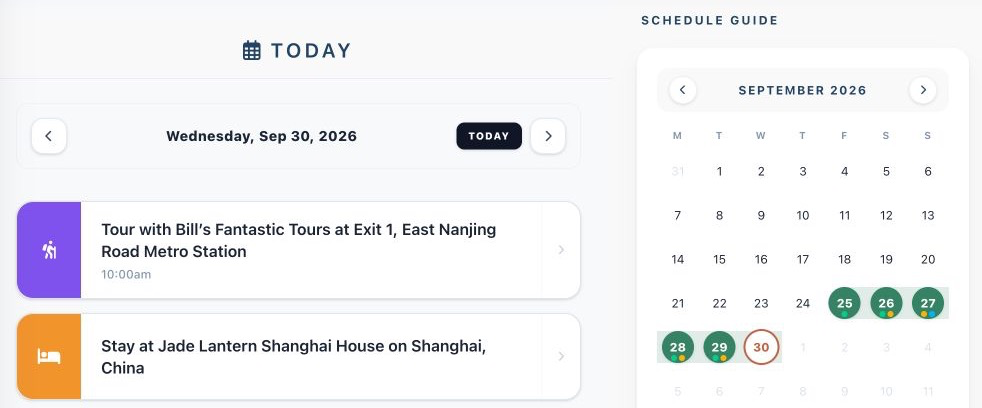
The screenshot above illustrates how daily travel plans and lodging can be laid out chronologically in the Suitcase2Go web itinerary interface, showing fictional demo data rather than live schedules.
Afternoon: Riga Old Town (Vecrīga)
After checking into your Riga accommodation, head into Vecrīga (Old Riga). Walk through Town Hall Square to admire the House of the Black Heads, a 14th-century fraternity guild house reconstructed with Gothic and Dutch Renaissance ornamentation after World War II damage. Just behind it stands the spire of St. Peter's Church; take the interior elevator up to the tower platform for sweeping views across the Daugava River and the city's red rooftops.
Evening: Livu Square and Bastejkalna Park
Wind your way toward Livu Square (Līvu laukums), surrounded by colorful merchant buildings including the Cat House with its curious feline roof ornaments. Conclude your evening with a stroll along the canal in Bastejkalna Park (Bastion Hill), bordering the Freedom Monument.
Day 4: Art Nouveau Architecture and Riga’s Riverfront
Morning: The Quiet Centre Art Nouveau Quarter
Riga possesses one of the world's dense concentrations of Art Nouveau (Jūgendstils) architecture, built during the economic boom of the late 19th and early 20th centuries. Walk north from the Old Town into the Quiet Centre, focusing on Alberta Street (Alberta iela) and Elizabetes Street (Elizabetes iela).
Admire the facades designed by architect Mikhail Eisenstein, adorned with stone gargoyles, mythological beasts, and expressive sculpted faces. Stop by the Riga Art Nouveau Centre (Alberta iela 12), housed in an apartment featuring an authentic spiral staircase and preserved interior decor from 1903.
Transit Tip: Getting Around Riga
While Central Riga is walkable, moving between outer districts or the airport is easy with public transit. According to the LiveRiga Public Transport Guide, a 90-minute transit transfer ticket costs €1.50, while a 24-hour network pass costs €5.00, valid across city trams, trolleybuses, and municipal buses.
Afternoon: Riga Central Market (Centrāltirgus)
Return south to the Riga Central Market, located immediately south of the railway tracks. Housed in five repurposed German Zeppelin hangars from the 1920s, this UNESCO-listed market is one of Europe's largest. Each pavilion specializes in specific goods: smoked fish and Baltic sprats, cured meats, dairy and caraway cheeses, seasonal berries, and freshly baked Latvian rye sourdough bread (rupjmaize). Grab lunch from the market food stalls or sample warm pastries.
Evening: Daugava River Cruise or Quiet Dinner
End your day along the riverfront embankment. If traveling between May and September, boarding a canal boat through the city canal and out into the Daugava offers a view of the illuminated city skyline, suspension bridge, and the National Library of Latvia (the "Castle of Light").
Day 5: Riga to Tallinn via the Gulf of Riga
Morning Transit: Journey North to Estonia
- Departure Hub: Riga International Coach Terminal (Rīgas Starptautiskā autoosta, Prāgas iela 1).
- Arrival Hub: Tallinn Central Bus Station (Tallinna Bussijaam, Lastekodu 46).
- Average Journey Time: 4 hours 15 minutes to 4 hours 30 minutes.
Catch a morning coach on the Lux Express Riga–Tallinn Route. This route hugs the coastline of the Gulf of Riga, passing through pine forests and making a brief scheduled stop in the Estonian summer resort town of Pärnu before continuing to Tallinn.
Upon arrival at Tallinna Bussijaam, catch tram line 2 or 4 directly into the city center (a 10-minute ride), or take a short taxi ride to your lodging. If you plan extensive museum visits, consider purchasing the Visit Tallinn Official Tallinn Card (offered in 24-, 48-, and 72-hour versions), which includes free municipal public transit and admission to over 50 sights.

Afternoon: Tallinn's Upper Town (Toompea)
Begin your exploration on Toompea Hill, the historic seat of Estonian power. Visit the Russian Revival-style Alexander Nevsky Cathedral with its onion domes, standing directly opposite Toompea Castle (home of the Estonian Parliament, the Riigikogu).
Walk to the Patkuli and Kohtuotsa viewing platforms. Kohtuotsa provides an unobstructed panorama over Tallinn’s stone defensive towers, pointed church steeples, and modern commercial district receding to the Gulf of Finland.
Evening: Town Hall Square (Raekoja plats)
Descend the historic cobblestone lane of Pikk Jalg ("Long Leg") into the Lower Town. Enter Town Hall Square, dominated by the Gothic Town Hall completed in 1404. Across the square sits the Town Hall Pharmacy (Raeapteek), operating continuously since at least 1422. Dine in the Old Town cellar taverns on braised game, root vegetables, and Estonian craft beer.
Day 6: Creative Quarters, Maritime History, and Kadriorg
Morning: Telliskivi Creative City and Balti Jaam Market
Walk through the western gate of the Old Town toward Balti Jaam train station. Explore the modern Balti Jaam Market (Balti Jaama Turg), featuring street food counters, local produce, and vintage stalls.
Directly behind the station lies Telliskivi Creative City (Telliskivi Loomelinnak), a former industrial railway factory complex transformed into Estonia’s creative engine. Here you will find design boutiques, coffee roasters, mural-covered courtyards, and Fotografiska Tallinn, an internationally recognized satellite of the Stockholm photography museum.
Afternoon: Kadriorg Palace and Kumu Art Museum
Take tram line 1 or 3 east to Kadriorg Park. Commissioned in 1718 by Russian Tsar Peter the Great for his wife Catherine I, Kadriorg Palace is a petrine baroque estate surrounded by manicured flowerbeds, canals, and oak trees. The palace interiors house the foreign art collection of the Art Museum of Estonia.
A five-minute walk past the palace grounds brings you to Kumu, Estonia’s flagship art museum set inside a curved limestone and copper building cut into the limestone cliff. Kumu showcases Estonian art from the 18th century through the Soviet era and contemporary works.
Evening: Seaside Noblessner District
Head to Noblessner, a historic submarine shipyard on Tallinn Bay that has evolved into a seaside quarter with design studios, waterfront saunas, craft breweries, and sea-view restaurants. Catch the sunset over the Baltic Sea from the harbor promenade.
Day 7: Coastal Fortresses and Departure
Morning: Seaplane Harbour (Lennusadam)
Spend your final morning exploring the Seaplane Harbour maritime museum, housed in concrete hangars built during World War I as part of Peter the Great’s Naval Fortress. The museum centerpiece is the Lembit, an authentic 1930s British-built submarine you can climb aboard, alongside historical icebreakers and seaplanes.
Afternoon: Souvenir Browsing and Departure Logistics
Return to the Old Town along St. Catherine’s Passage (Katariina käik), a medieval cloistered alley where traditional guilds craft glassware, ceramics, and hand-knitted wool sweaters. Pick up local souvenirs like Juniper wood utensils or Vana Tallinn herbal liqueur.
Depending on your onward route, transport out of Tallinn is simple:
- Tallinn Airport (TLL): Located 4 km from the city center, reachable in roughly 15 minutes by tram or taxi.
- Tallinn Passenger Port (D-Terminal & A-Terminal): Within walking distance or a short cab ride from Old Town, offering regular 2-hour ferries across the Gulf of Finland to Helsinki, Finland.

Practical Baltic Planning Checklist
To ensure your one-week trip proceeds smoothly, keep these key logistical recommendations in mind:
| Planning Detail | Express Bus Standard | What to Prepare |
|---|---|---|
| Advance Booking | Recommended 2–4 weeks early | Dynamic pricing increases bus ticket costs closer to departure; lock in early morning or mid-day departures. |
| Luggage Storage | 1 large stowed bag + 1 carry-on | Included in standard bus tickets; check oversized or sports equipment guidelines ahead of time. |
| Cross-Border ID | Valid passport / national ID | Schengen borders have no routine passport control, but random spot-checks require valid documents. |
| Museum Schedules | Many closed on Mondays | Check individual museum schedules in Vilnius, Riga, and Tallinn, especially when planning Day 1 or Day 6. |
| Currency & Payment | Euro (€) across all three nations | Contactless debit/credit cards are widely accepted; carry small cash coins for markets or public restrooms. |
Keeping Your Multi-City Bookings Together
Coordinating multiple intercity coach tickets, distinct hotel reservations across three countries, and transit passes can clutter your email inbox. If you want to keep your travel confirmations, departure times, and daily walking stops organized in one clear timeline without building a complicated spreadsheet, explore Suitcase2Go to manage your next multi-city journey smoothly.