
When you piece together a multi-segment vacation—pairing flights with boutique hotels, a rental car, or a mid-trip cruise—every provider introduces its own contract clock. A hotel cancellation deadline might look like "48 hours before check-in," but the fine print may tie that window to the property's local clock rather than your home time zone. Meanwhile, cruise lines enforce escalating penalty milestones months before embarkation, and prepaid rental cars carry steep cancellation fees.
Without a methodical audit workflow, travelers frequently discover financial penalties only after a charge hits their card. Conducting a structured reservation audit immediately after booking protects your budget and clarifies your options if your travel plans change.

The Common Traps in Travel Deadlines
Cancellation and deposit policies rarely follow standard conventions. Five critical variables frequently trip up travelers:
- The Time Zone Trap: Hotel cancellation windows almost universally reference the property’s local time zone, not where you purchased the ticket or where you live. If a resort in Tokyo requires cancellation by 11:59 PM 48 hours prior, a traveler in New York City must cancel by morning on that cutoff day.
- Tiered Milestone Schedules: Cruise bookings and multi-day tours do not use binary "refundable or non-refundable" terms. Instead, penalties escalate along structured calendars that begin months before departure.
- 24-Hour Regulatory Boundaries: Government consumer protections carry strict conditions that do not apply universally to every booking channel.
- Prepaid vs. Pay-Later Car Penalties: Opting for "Pay Now" discounts on car rentals introduces immediate cancellation penalties that do not exist on flexible reservations.
- Automated Calendar Drift: Adding a confirmation email to a digital calendar often defaults to an all-day reminder or snaps to your current device time zone, obscuring the actual cutoff hour.
The 5-Step Trip Booking Audit Workflow
Run this audit within 24 hours of completing your reservations, while early cancellation remedies remain available.
[Step 1: Inspect Rate Category]
       │
       ▼
[Step 2: Calculate Local Cutoff Timestamps]
       │
       ▼
[Step 3: Map Tiered Deposit Schedules]
       │
       ▼
[Step 4: Audit Direct vs. Third-Party Channels]
       │
       ▼
[Step 5: Centralize & Set Action Alerts]
Step 1: Isolate the Exact Rate Plan and Terms
Open the original confirmation receipt or PDF invoice for each segment. Do not rely on summary snippets on confirmation splash pages; look for the designated "Rate Rules," "Fare Basis," or "Policy Details" section.
- Non-Refundable / Advance Purchase: If your hotel receipt states "Advance Purchase" or "Non-Refundable Rate," your audit concludes immediately for that line item. Under official terms such as Hilton Advance Purchase policies, 100% of the total cost is charged upfront, and no refunds or credits are permitted upon cancellation or modification.
- Semi-Flexible Rates: Note whether the rate permits penalty-free cancellation until a specific hour, or if changes incur a fixed administrative fee.
- Loyalty Award Stays: Verify whether reward points are restored without penalty upon cancellation. For instance, Marriott reservation policies note that Marriott Bonvoy award reservations return points if canceled before the property-specific cutoff, but late cancellations forfeit points or incur a property-specific cash penalty.
Step 2: Convert Cutoff Times to the Destination's Local Clock
Hotels calculate cancellation cutoffs based on the physical location of the property. When an itinerary says "cancel 1 day prior by 6:00 PM," that means 6:00 PM at the front desk.
- Check the property's local time zone (e.g., CEST, JST, HST).
- Calculate the difference against your home time zone.
- Establish your "Safe Action Date": schedule your personal reminder at least 24 hours ahead of the property’s true local cutoff. This buffer prevents unexpected network issues, business hour closures, or currency processing delays from crossing the deadline.
Step 3: Chart Tiered Milestone Penalties for Cruises and Tours
If your trip includes a cruise or guided expedition, cancellation terms operate across distinct tiered windows rather than a single deadline.
For example, under Royal Caribbean cancellation terms, trips of 1 to 9 nights incur zero fare penalty (outside of any Non-Refundable Deposit) up to 90 days before sailing. Between 89 and 61 days prior, the penalty rises to 50% of the total price; between 60 and 31 days, it reaches 75%; and at 30 days or fewer, the penalty is 100%. If you selected a Non-Refundable Deposit (NRD) fare, that initial down payment is forfeited regardless of when you cancel.

Record each penalty milestone as an explicit calendar deadline so you can make go/no-go decisions before reaching the next financial tier.
Step 4: Audit Booking Channels and Ground Transit Rules
Next, evaluate how the reservation was processed:
- Airfare 24-Hour Direct Rules: Under U.S. Department of Transportation refund rules (14 CFR § 259.5(b)(4)), airlines operating flights touching the United States must provide either a 24-hour fee-free hold or a 24-hour full cash refund window after booking, provided the ticket is purchased at least seven days (168 hours) prior to departure. Crucially, the DOT affirms that this federal mandate applies only to tickets purchased directly from the airline, not through third-party agencies or Online Travel Agencies (OTAs).
- Prepaid Car Rentals: Inspect car rental vouchers closely. Under Hertz prepaid cancellation policies, canceling a prepaid reservation more than 24 hours before pickup carries a $100 fee. Canceling within 24 hours increases the fee to $200, and failing to cancel before scheduled pickup results in a 100% forfeiture of the prepaid balance. Standard "Pay Later" rentals, by contrast, require no deposit and carry no cancellation penalty.
Step 5: Centralize Documentation and Set Staggered Alerts
Once you have verified the true cutoffs and penalty tiers, compile the confirmation documents, terms, and dates in one shared location.
To keep track of multiple reservations without cluttering your personal inbox:
- Store the original booking confirmations and PDF rate terms alongside the reservation entry.
- Set two reminders for each deadline: a review reminder 72 hours out and a final action deadline 24 hours ahead of the local cutoff.
- Share the itinerary details and policy boundaries with travel companions so everyone understands the deposit schedule.
Worked Audit Example: The High-Alpine Vacation
To see how these rules interact in practice, consider a fictional five-day itinerary: a round-trip direct flight, a four-night boutique alpine resort stay, and a prepaid rental car.
| Booking Segment | Stated Marketing Term | Audited Contract Term | Safe Action Window |
|---|---|---|---|
| Direct Flight | "Free 24-hour cancellation" | DOT mandate applies only if booked 7+ days prior, counting down from the exact purchase timestamp. | Cancel within 20 hours of transaction. |
| Alpine Resort | "Cancel free up to 2 days prior" | Cutoff is 11:59 PM local property time (CET). For a US East Coast traveler, this is 5:59 PM EST. | Cancel 3 full days prior to avoid time zone drift. |
| Rental Car | "Pay Now discount rate" | $100 penalty if canceled >24 hours before pickup; $200 penalty if within 24 hours; full loss for no-show. | Cancel at least 48 hours prior if plans shift. |
In this example, relying on casual assumptions about "48 hours prior" or "free cancellation" could result in several hundred dollars in surprise fees. Walking through each provider's exact contract terms reveals the real financial boundaries.
Comparing Tracking Methods: Spreadsheets vs. Dedicated Platforms
Travelers commonly track these details using one of two methods:
- Manual Spreadsheets (Google Sheets or Excel): A custom spreadsheet is free, highly customizable, and requires no external software. However, it requires manual calculations for time zone differences and lacks automated calendar syncing unless manually scripted.
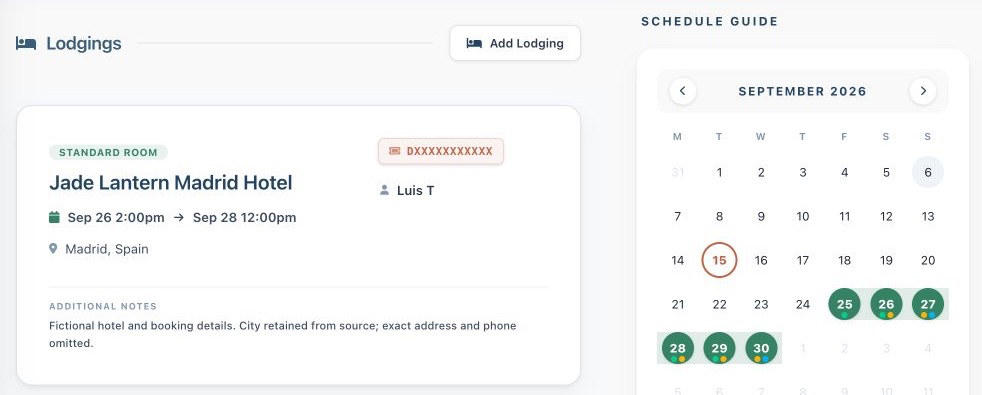
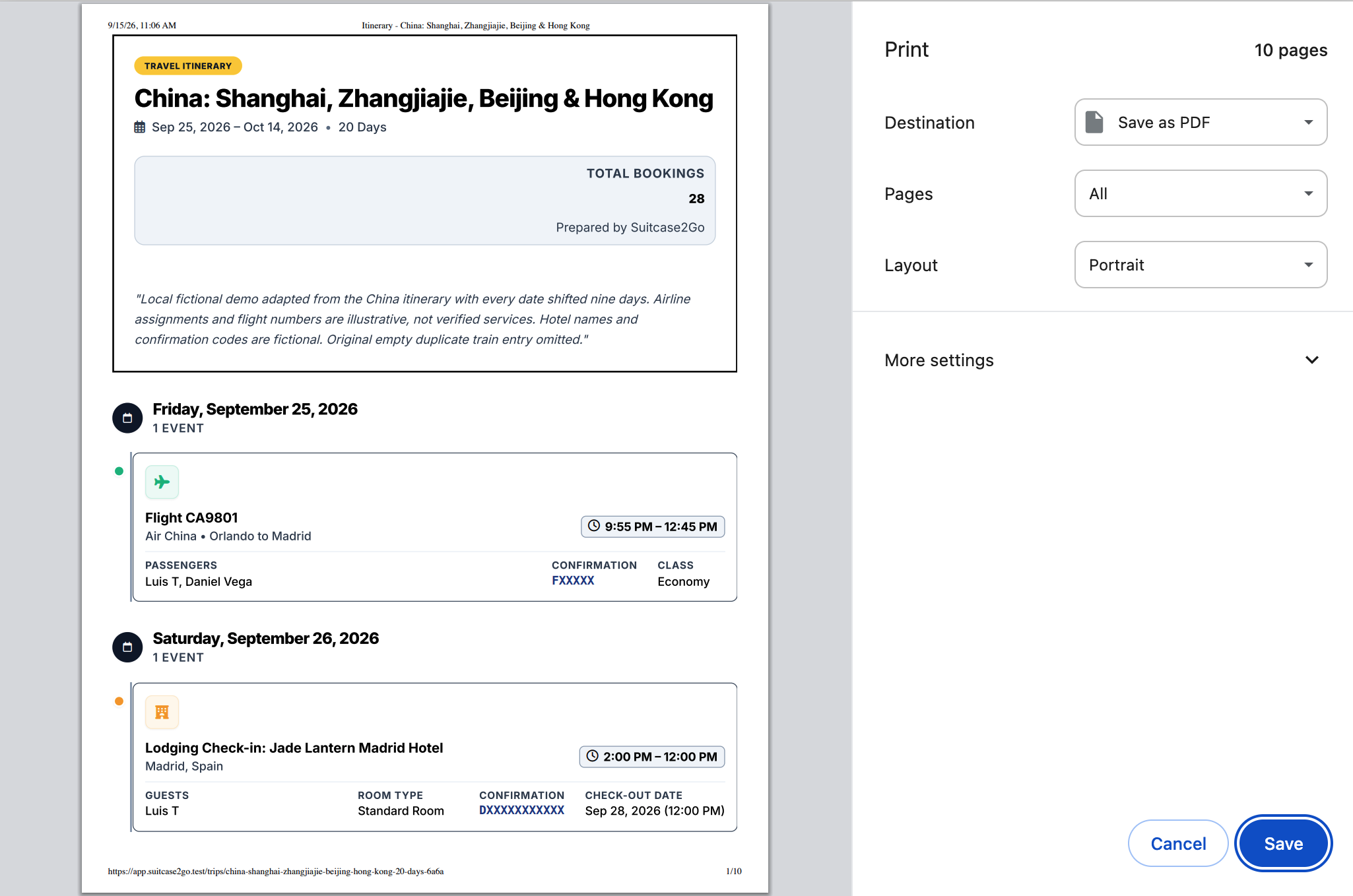
- Centralized Itinerary Hubs: A platform like Suitcase2Go lets you organize trips with flights, stays, and daily plans in one dashboard. With the Chrome extension, you can connect your account, select a target trip, and add reservation details directly from active pages. You can store booking attachments and emails in one place, review entries against confirmations, and share plans with companions via email permissions or browser print outputs.
Whichever method you choose, keeping your confirmation documents alongside your schedule helps you make informed choices before non-refundable deadlines arrive.
Frequently Asked Questions
Does the 24-hour airline cancellation rule apply to OTA bookings?
No. Federal DOT protections mandate 24-hour cancellation holds or refunds only for direct purchases made through an airline’s sales channels (website, counter, or phone) on flights booked at least seven days before departure. Third-party travel agencies set their own refund and fee policies.
If my hotel confirmation gives a 24-hour cancellation window, when does the clock start?
The cutoff is anchored to the property's local check-in time (or local midnight, depending on the contract), not your departure time or current location. Always verify the specific hour listed in your confirmation's rate details.
Are reward night bookings always free to cancel?
Not always. While point balances are typically redeposited when canceled ahead of the deadline, late cancellations or no-shows frequently incur cash penalties or point forfeitures matching standard room rates.
What happens if I miss a prepaid rental car pickup?
Most major rental agencies treat unnotified missed pickups on prepaid reservations as a no-show, which forfeits the entire prepaid amount without refund or credit.