Rail passes and regional transit cards are often marketed as effortless solutions for multi-city travel. The promise of hopping onto any train without purchasing individual tickets sounds liberating. Yet for many itineraries, buying a comprehensive rail pass is significantly more expensive than purchasing individual point-to-point tickets or relying on automated fare capping.
Evaluating whether a pass makes financial and logistical sense requires looking beyond the headline retail price. Surcharges, reservation quotas, service-class restrictions, and local transit rules can quickly erode a pass's value. This guide provides a repeatable, five-step evaluation framework to compare transit passes against single-ticket alternatives.

Step 1: Map the Real Route and Required Service Classes
The most frequent mistake in transit planning is assuming a regional pass covers every train traveling across a map. Modern rail networks divide services into strict operational tiers: local stopping trains, regional express routes, and high-speed intercity lines.
Understand Category Inclusions and Exclusions
When an all-inclusive regional pass carries an attractive flat rate, it almost always restricts access to premier high-speed services.
- Germany's Local Network: The national Deutschland-Ticket permits unlimited travel across city transit (U-Bahn, S-Bahn, trams, buses) and regional trains (RB, RE). However, Deutsche Bahn rules strictly exclude high-speed intercity routes (ICE, IC, EC). If your journey requires crossing the country in three hours instead of eight, a regional pass will not cover your journey.
- Japan's Shinkansen Hierarchy: The nationwide Japan Rail Pass covers standard bullet trains like the Hikari, Kodama, and Sakura. However, JR Group conditions specify that the fastest premier services—the Nozomi and Mizuho—are excluded unless passengers buy an additional special supplementary ticket.
Actionable Rule: List every connection on your planned itinerary and categorize the train class needed. If your travel relies primarily on high-speed rail to cover long distances quickly, a regional or local pass will force you to choose between slow regional transfers or buying separate full-price express tickets.
Step 2: Account for the Hidden "Pass-Plus" Costs
A pass rarely represents your final out-of-pocket transportation expense. Traditional long-distance passes frequently require mandatory seat reservations that carry separate fees.

Mandatory Seat Reservation Surcharges
On many European routes, holding an active pass does not entitle you to step onto the train.
- As documented by Eurail seat reservation guidelines, popular high-speed trains—such as Eurostar, French TGVs, and Italian Frecciarossas—as well as overnight sleeper trains require mandatory paid reservations for pass holders.
- These reservation fees range from nominal sums to over €30 per seat on cross-border high-speed routes.
- Point-to-point tickets bought directly from national operators (such as Trenitalia, DB, or SNCF) often bundle the seat assignment into the base ticket fare, eliminating the extra surcharge.
The Pass-Holder Seat Quota Bottleneck
Train operators often cap the number of seats allocated to pass holders on high-demand departures. Even if a train shows empty seats available for commercial purchase online, the discounted pass-holder quota may already be exhausted weeks in advance. If your itinerary requires fixed travel windows, this can strand pass holders or force them to buy expensive last-minute standard tickets.
Step 3: Run the Point-to-Point Comparison Worksheet
To determine your true breakeven threshold, calculate both options using realistic travel scenarios rather than idealized daily averages. Avoid comparing a flexible walk-up pass against the most expensive flexible walk-up point-to-point fare unless you genuinely plan to book every ticket minutes before boarding.
Worked Example: The Flexible Breakeven Test
Consider a fictional 7-day trip across three major regional hubs (City A, City B, and City C) featuring two primary travel days, three local day trips, and four days of inner-city transit.
| Expense Category | Scenario 1: All-Inclusive Rail Pass | Scenario 2: Advance Point-to-Point + Local Transit |
|---|---|---|
| Base Pass or Ticket Cost | $320 (7-day Regional Flex Pass) | $130 (Two advance high-speed legs @ $65 each) |
| Seat Reservation Fees | $30 (Two mandatory express bookings @ $15) | $0 (Included with advance ticket fares) |
| Regional Excursions | $0 (Covered by base pass) | $45 (Two local return tickets @ $22.50) |
| Urban City Transit | $25 (Pass excludes private city metro systems) | $32 (Contactless pay-as-you-go / capped fares) |
| Total Cost | $375 | $207 |
| Flexibility Profile | Hop on/off local lines; fixed reservations on express legs | Fixed departure times on main legs; spontaneous local trips |
In this typical pattern, purchasing a full pass costs roughly $168 more than buying individual advance tickets, primarily because the pass's daily value goes underutilized on days spent exploring a single city.
Step 4: Compare Full Passes Against Hybrid Discount Cards
Travelers often assume the choice is binary: an expensive unlimited pass or full-price single tickets. However, many established networks offer a hybrid model: an affordable discount card paired with discounted point-to-point fares.
The Swiss Network Model
Switzerland's transit system provides a clear blueprint for this dynamic. According to SBB travelcard guidance, overseas travelers generally choose between two primary paths:
- The Swiss Travel Pass: Provides unlimited access to regular trains, postbuses, lake boats, and public urban transit across dozens of cities, alongside free entry to hundreds of museums.
- The Swiss Half Fare Card: Costs CHF 150 for one month and reduces nearly all standard public transit fares and many mountain excursions by 50%.
For a traveler embarking on multiple high-altitude excursions (such as the Jungfraujoch rack railway), the Half Fare Card often yields a higher discount percentage on private mountain lines than the all-inclusive pass. When paired with discounted advance Saver Day Passes, the discount card frequently undercuts the cost of a full pass for moderately paced itineraries.
Step 5: Leverage Automated Fare Capping in Urban Centers
When evaluating inner-city transit networks, buying pre-printed physical multi-day tourist travelcards is frequently a sub-optimal choice. Modern municipal transit authorities increasingly implement automated fare capping on contactless payment cards and smart devices.
The Contactless Advantage in London
According to Transport for London's ticketing guidance, paying with a contactless bank card or Oyster card is explicitly cheaper and better value than buying a traditional single-day paper Day Travelcard for travel across London Zones 1 through 9.
Through TfL daily and weekly fare capping, the system automatically tallies your journeys and stops charging you once you reach the statutory daily threshold. You do not need to forecast how many bus or tube rides you will take in advance, avoiding the risk of paying for unused transit days.

Important Logistics Constraints to Check Before Buying
Before finalizing your ticket strategy, review these essential operational caveats:
- Delay Protection and Passenger Rights: Under certain transit regulations, tickets categorized as deeply discounted or regional—such as Germany's regional pass governed by Deutsche Bahn delay terms—do not permit passengers to switch to delayed high-speed trains free of charge. If missing a tight connection would derail your itinerary, buying dedicated long-distance tickets provides stronger passenger protections.
- Consecutive vs. Flex Validity: A "7-day pass" often means seven consecutive calendar days from first activation, not seven arbitrary days scattered across your month. If you remain stationary in one destination for three days, you burn three days of pass validity.
- Private and Scenic Trackage: Scenic mountain rail lines and historic private tracks rarely accept national rail passes at face value. Always inspect the operator's line-by-line validity map to confirm whether a route requires an extra cash supplement.
Keeping Your Bookings and Daily Schedules Aligned
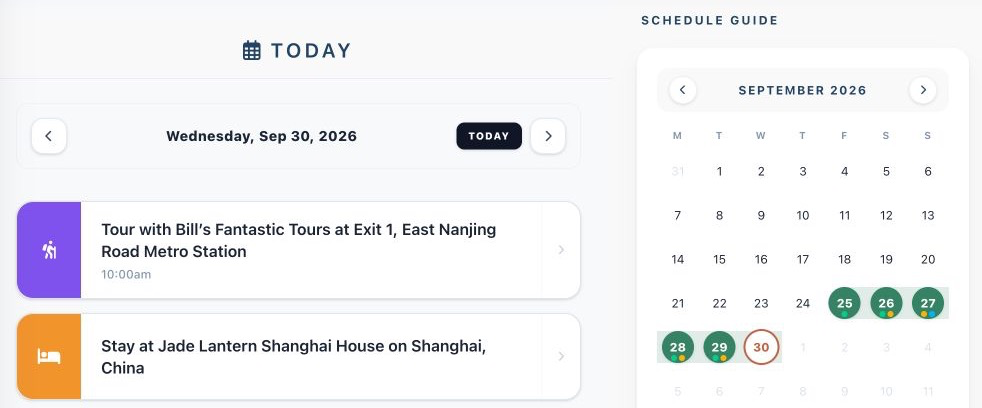
Managing transit logistics across multiple regions—coordinating seat reservations, timed rail tickets, and city passes—can quickly clutter your inbox. As you evaluate your route, keeping your flight confirmations, hotel bookings, and rail legs in one place ensures you never lose track of a reservation window.
Travelers can organize upcoming trips, track connection buffers, and coordinate their daily itineraries using Suitcase2Go. Having your confirmed departure times, booking documents, and daily schedules structured together makes it simple to spot gaps where an advance ticket or a local transit pass delivers the best return.