
Watching the airport luggage carousel grind to a halt while your bags remain unaccounted for is one of modern travel's most frustrating disruptions. Yet behind the physical delay lies a strictly codified legal framework governing airline accountability, interim purchase rights, and expense reimbursement.
Airlines often rely on passenger fatigue to minimize payouts. Travelers routinely abandon valid claims or, conversely, overspend on items airlines legally reject. Navigating this process successfully requires swift administrative action before leaving the airport, disciplined purchasing behavior, and methodical evidence tracking.

Immediate Airport Protocol: The First 60 Minutes
Your right to reimbursement begins the moment you confirm your luggage is missing. Leaving the arrivals hall without completing formal paperwork can forfeit your legal standing under both domestic regulations and international treaties.

1. Locate the Operating Carrier's Baggage Service Office (BSO)
Before heading to ground transportation or contacting your hotel, find the physical Baggage Service Office assigned to the carrier that operated your final flight segment. If your journey involved multiple airlines on a single ticket, international aviation rules hold the final delivery carrier responsible for handling the delay report.
2. File a Property Irregularity Report (PIR)
Do not accept an informal verbal assurance that your bag "will probably arrive on the next flight." Request a formal incident report, commonly known as a Property Irregularity Report (PIR) or Mishandled Baggage Report. Many major carriers, such as Delta Air Lines and American Airlines, allow passengers to initiate or finalize this report via self-service mobile portals or QR codes displayed at the carousel, but getting a printed or emailed copy is critical.
Ensure your incident report includes:
- Your full legal name, permanent address, and active temporary accommodation address.
- Direct contact phone numbers and email.
- The exact bag tag barcode numbers from your boarding pass stubs.
- A detailed physical description of the luggage (color, brand, distinctive straps, tags, or identifying marks).
- A unique 5-letter, 5-number reference file code (e.g.,
LHRBA12345). This code is necessary for tracking through global tracing systems like WorldTracer.

3. Safeguard Your Physical Baggage Claim Stubs
Never surrender your original adhesive baggage claim tags to an airline agent without keeping a clear photo on your smartphone. These small stickers contain the 10-digit IATA barcode that links your bag to the carrier’s internal routing manifest.
Legal Frameworks: Domestic vs. International Flights
Airline liability for delayed luggage is governed by two separate legal regimes. Knowing which applies to your itinerary determines your compensation cap and consumer protections.
| Regulatory Regime | Governing Law | Maximum Liability Ceiling | Filing Deadline for Expenses |
|---|---|---|---|
| U.S. Domestic Itineraries | 14 CFR Part 254 (U.S. DOT) | $4,700 per passenger | Set by carrier contract (typically within 21–30 days) |
| International Itineraries | Montreal Convention 1999 (Article 22/31) | 1,519 SDR (~$2,000–$2,175 USD) | 21 calendar days from bag delivery |
U.S. Domestic Rules: 14 CFR Part 254
For purely domestic flights within the United States, carrier obligations are enforced by the U.S. Department of Transportation (DOT). Under federal regulations:
- Liability Cap: Airlines cannot limit their liability for provable direct or consequential damages to less than $4,700 per passenger on large aircraft.
- Prohibition of Arbitrary Daily Limits: While customer service agents frequently cite an informal "$50 per day" guideline, the DOT explicitly prohibits carriers from imposing arbitrary daily spending ceilings. Airlines must cover all reasonable, actual, and verifiable incidental expenses incurred while luggage is delayed.
- Mandatory Bag Fee Refunds: In addition to expense reimbursement, U.S. carriers are required to refund checked baggage fees if the baggage is significantly delayed (typically defined as arriving more than 12 hours after domestic gate arrival).
International Rules: The Montreal Convention (MC99)
If your itinerary includes an international leg—even if the delay occurs on a domestic connecting sector—the Montreal Convention governs your rights:
- Unified Liability Limit: Under the mandatory periodic inflation review, the liability limit under Article 22(2) is 1,519 Special Drawing Rights (SDR) per passenger (effective December 28, 2024). SDR is an international reserve asset created by the IMF whose currency exchange rate fluctuates daily.
- Strict 21-Day Statutory Window: Under Article 31, passengers must submit a formal, written expense claim to the airline within 21 calendar days from the date the delayed bag was placed at their disposal. Missing this deadline eliminates your legal claim.
- Official Loss Status: A delayed bag is legally deemed lost once 21 consecutive days have elapsed without delivery, transforming an interim delay claim into a permanent loss settlement.
What Qualifies as "Reasonable and Necessary" Expenses?
Airlines are legally required to reimburse necessary, out-of-pocket expenses resulting from baggage delays. However, they will review every receipt during audit. Understanding what is routinely approved versus what is rejected protects you from unexpected costs.
Generally Reimbursable Necessities
- Toiletries & Grooming: Toothbrush, toothpaste, deodorant, skincare basics, hairbrush, contact lens solution, and shaving supplies.
- Essential Baseline Clothing: Basic changes of underwear, socks, sleepwear, and everyday casual outfits suitable for the climate.
- Event-Specific or Business Attire: If you are attending a verified wedding, black-tie event, or corporate conference and your formalwear is delayed, reasonable replacement garments or rental clothing are generally covered.
- Specialized Outdoor Equipment Rental: If you booked an active expedition (such as skiing or hiking), rental fees for essential gear like boots or waterproof outer layers may be claimed if directly required for planned activities.
- Emergency Medical Basics: Over-the-counter medicine or replacement prescription items needed immediately.
Commonly Denied Expense Claims
- Luxury Brand Upgrades: Purchasing designer or high-end clothing when modest, functional substitutes are locally available.
- Excessive Wardrobe Quantities: Buying five complete outfits during a 24-hour delay.
- Non-Essential Electronics: Laptops, premium headphones, or cameras (airlines typically exclude high-value electronics from checked baggage liability in their conditions of carriage).
- Items for Travelers Not on the Reservation: Claiming clothing or supplies for companions traveling under separate reservations or whose luggage was successfully delivered.
The "Homeward Journey" Exception
A critical distinction made by aviation authorities, including the UK Civil Aviation Authority, is whether the delay occurs away from home or upon return to your primary residence. When your baggage is delayed on your flight home, airlines routinely reject replacement clothing claims under the assumption that you already possess adequate wardrobe and toiletries at your residence. Inward claims are generally limited to specific emergency expenses, such as house keys locked in luggage or critical medical items.
The Step-by-Step Claim Submission Workflow
Submitting your claim requires strict adherence to airline submission windows and documentation standards.
[Bag Missing on Carousel]
          │
          ▼
[File Airport PIR / Reference File Code at BSO]
          │
          ▼
[Purchase Modest, Itemized Essentials (Retain Receipts)]
          │
          ▼
[Receive Bag Delivery & Record Exact Delivery Timestamp]
          │
          ▼
[Submit Written Claim + Receipts to Carrier (Within 21 Days)]
Step 1: Retain Original, Itemized Receipts
Credit card statement lines alone are almost never sufficient. Airline claims departments require itemized store receipts displaying:
- Exact merchant name and store address.
- Date and time of purchase (verifying purchases occurred during the delay period).
- Explicit line items describing each individual article (e.g., "Men's Cotton Shirt," not a generic "Apparel" SKU).
- Payment method showing the final amount charged.
Step 2: Record Bag Delivery Details
When the airline courier delivers your bag, make a written note of the exact date and delivery time, the delivery company name, and the courier driver's signature sheet or digital tracking record. This delivery timestamp establishes the legal closure of the delay period.
Step 3: Draft Your Formal Claim Letter
Within the carrier's specified submission window (and within 21 days for international itineraries), submit your claim via the airline’s dedicated online portal or by certified written notice. Include:
- Your full passenger contact details and ticket number (13-digit e-ticket code).
- The PIR / Incident File Reference Number.
- Flight segment details, dates, and origin/destination.
- A chronological explanation of the delay and delivery timestamps.
- An itemized table listing every receipt, item description, and monetary total in the original currency.
- Clear PDF scans or photos of each receipt.
Practical Organization for Multi-Leg Travel
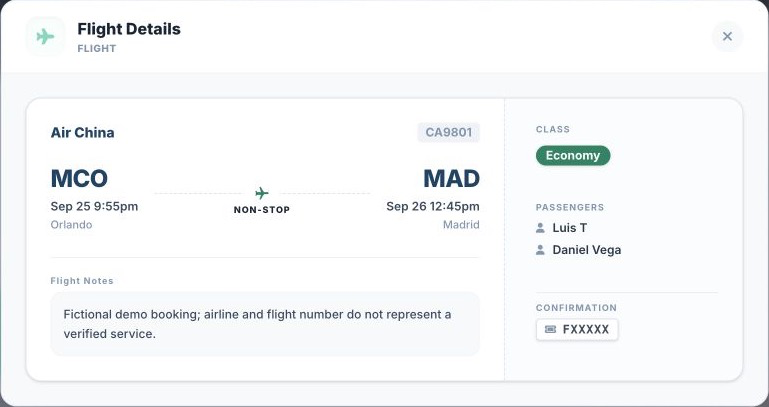
Managing travel itineraries, flight confirmation codes, and baggage claim paperwork across multiple connecting airlines can quickly become unmanageable when delays happen. Keeping flight confirmations, ticket numbers, and booking documents organized in a central, accessible hub allows you to pull up file references and contact information the moment you reach the baggage service desk.
Using an intuitive trip planner like Suitcase2Go lets you manage your flights, hotel stays, and daily itineraries in one unified space. When unexpected logistical hurdles occur, having quick access to your booking attachments, confirmed flight numbers, and schedule specifics makes filing your initial airline incident reports much smoother.
Summary Checklist: Before You Leave the Carousel
- Check carousel surroundings for oversized or offloaded luggage areas.
- Locate the operating airline's Baggage Service Office.
- File an official Property Irregularity Report (PIR) and obtain your 10-character file tracking reference.
- Photograph your physical baggage claim stickers and boarding pass.
- Confirm delivery address details with the agent.
- Review whether domestic ($4,700 cap) or international (1,519 SDR cap) rules apply to your ticket.
- Restrict purchases to verifiable, immediate necessities and save all itemized merchant receipts.
- Submit your complete written claim within 21 days of bag delivery.