Cruise embarkation day is an exercise in time management and packing precision. Between staggered port arrival slots, airport-to-pier ground transportation, security checkpoints, and a multi-hour delay before your checked luggage reaches your cabin, a minor logistical oversight can stall your vacation before the ship ever leaves the dock.
Navigating embarkation smoothly comes down to understanding two operational realities: cruise terminals run on strict queue-management appointments, and shipboard staterooms are rarely accessible before early afternoon. This workflow guide walks through the exact mechanics of coordinating your arrival window, organizing transfers, packing a self-sustaining cabin day bag, and managing the boarding transition.

Step 1: Secure and Respect Your Staggered Arrival Window
Modern cruise terminals do not operate as open-door holding pens. Major lines utilize staggered arrival windows to meter the flow of thousands of passengers across check-in desks, security scanners, and customs processing.

- Check-In Timelines: When online check-in opens—typically 30 to 45 days prior to sailing depending on the carrier—log in immediately to select the earliest available terminal arrival appointment. Royal Caribbean terminal guidelines mandate finalizing online check-in at least three days before departure, noting that strict cut-offs apply 90 minutes before scheduled sailings.
- Early Arrival Penalties: Showing up hours ahead of your scheduled slot creates congestion. Under Carnival Cruise Line embarkation policies, guests who arrive before their reserved Arrival Appointment are routinely turned away outside the terminal and instructed to return at their assigned time.
- Late Arrivals: Arriving past your slot does not cancel your reservation, but it voids your priority placement, requiring port staff to fit you into subsequent standby lines as throughput allows.
| Carrier Policy Focus | Online Check-In Requirement | Terminal Cut-Off Window | Early Arrival Enforcement |
|---|---|---|---|
| Royal Caribbean | Complete at least 3 days prior | Strict closure 90 mins prior to sailing | Turned away until designated arrival slot |
| Carnival Cruise Line | Advance boarding pass & luggage printing | Strict final boarding time closure | Asked to exit facility and return at assigned time |
| Norwegian Cruise Line | Advance paperwork and manifest filing | Mandatory terminal gate cutoff | Managed in designated staging lines |
| Disney Cruise Line | Port arrival form & documentation check | Enforced boarding gate closing | Checked according to assigned boarding group |
Step 2: Calculate Port Transfers and Buffer Times
Getting to the pier requires accounting for terminal traffic bottlenecks, baggage unloading queues, and security screenings.

The Golden Rule: Never Fly In on Embarkation Morning
A delayed connection, mechanical hold, or crowded baggage claim on departure morning can easily cause you to miss your ship. Always arrive in your departure port city at least one day before sailing.
Choosing Your Ground Transfer Method
- Official Cruise Line Transfers: Most operators, such as Royal Caribbean ground transportation, provide scheduled motorcoach transfers directly connecting the regional airport baggage claim to the cruise pier. These transfers can be booked up to two weeks in advance. While convenient, they operate exclusively between the official gateway airport and the terminal; they generally do not pick up from off-site private hotels unless you booked an official cruise hotel package.
- Rideshare and Private Shuttles: If staying at a local hotel, booking an independent rideshare (Uber/Lyft) or dedicated port shuttle provides direct control over your schedule. Target arriving at the terminal drop-off lane 15 to 20 minutes before your formal appointment to allow time for vehicle drop-off queues and hand-off to pier porters.
[Departure City Hotel]
       │  (Target: Depart 45 mins before slot, accounting for port traffic)
       ▼
[Terminal Drop-Off & Porter Hand-Off]
       │  (Drop checked bags; attach pre-printed paper luggage tags)
       ▼
[Security Screening & Identity Check]
       │  (X-ray cabin day bag; verify passports and boarding passes)
       ▼
[Shipboard Boarding & Muster Check-In]
       │  (Complete safety check at designated muster station)
       ▼
[Public Decks & Lunch until Cabins Open (~1:30 PM)]
Step 3: Curate Your Cabin Day Bag
When you arrive at the terminal, porters take your large luggage to load onto cargo pallets for shipboard delivery. These bags must clear onboard sorting and security before crew members deliver them outside your stateroom door—a process that routinely takes until 4:00 PM to 6:00 PM.
Everything you require for your first eight hours must travel in your carry-on cabin bag. Furthermore, check the dimension rules: Norwegian Cruise Line luggage parameters specify that personal carry-on bags must fit through security X-ray scanners (roughly 24 inches tall by 18 inches wide). Bags exceeding these dimensions must be surrendered to the porters.
What Stays in Your Cabin Day Bag (Never Check These):
- Identity and Boarding Documentation: Passports, government-issued photo IDs, birth certificates, visas, and physical printed boarding passes. Port security will not let you enter the terminal without them in hand.
- Prescription Medications: All vital medications must be kept in your hand luggage in their original pharmacy containers, as highlighted in Disney Cruise Line packing guidelines.
- Valuables and Tech: Laptops, cameras, portable power banks, jewelry, and charging cables.
- Day-One Essentials: Swimsuits, sunglasses, reef-safe sunscreen, and a change of light clothes if you wish to enjoy pool decks before staterooms open.
- Permissible Beverages: Cruise lines strictly prohibit packing permitted beverages inside checked luggage. Any allowable sodas or sealed wine bottles must be hand-carried through terminal security.
Outside Beverage Rules by Line
- Royal Caribbean: Allows up to 12 standard cans/cartons/bottles (up to 17 oz each) of non-alcoholic drinks plus one 750 ml bottle of wine or champagne per adult of legal drinking age in hand luggage.
- Carnival Cruise Line: Permits up to 12 sealed cans or cartons of non-alcoholic drinks (no glass or plastic bottles) and one 750 ml bottle of wine or champagne per adult, strictly in carry-on bags.
- Disney Cruise Line: Permits up to six beers (12 oz) or one 750 ml bottle of wine/champagne per adult, plus non-alcoholic drinks, strictly in carry-on luggage.
- Norwegian Cruise Line: Prohibits all outside non-alcoholic beverages (including bottled water) unless medically cleared; sealed bottles of wine or champagne are permitted in carry-on bags subject to shipboard corkage fees.
Items Prohibited from Terminal Screening
Do not attempt to board with clothing irons, garment steamers, heating pads, extension cords, surge protectors, unapproved drones, or portable Bluetooth party speakers (which are strictly banned by Carnival).
Step 4: Work Through the Stateroom "Bridge" Window
Once through the gangway, standard ship operations dictate that passenger stateroom corridors remain closed by fire doors until approximately 1:00 PM to 2:00 PM while cabin stewards complete turnover sanitation.
To make this transitional window comfortable:
- Complete Mandatory Safety Steps First: Head directly to your assigned muster station (indicated on your mobile app or digital boarding pass) to check in with the safety crew and verify your emergency drill. Completing this immediately frees up the rest of your afternoon.
- Bypass the Central Buffet Bottleneck: Main lido buffets are heavily congested on embarkation day with passengers carrying roll-aboard bags. Seek out alternative included venues—such as open-air pool grills, solarium cafes, or designated dining rooms—which offer lighter crowds and more space for hand luggage.
- Monitor Cabin Announcements: Ships will broadcast a general announcement when staterooms are accessible. Proceed to your cabin, inspect your room keys, verify your muster station markings, and check that your delivered luggage matches your claim tags.

Comparison: Manual Spreadsheets vs. Centralized Itinerary Tracking
Managing cruise embarkation involves multiple moving parts across flights, pre-cruise lodging, private port transfers, and cruise line documentation deadlines.
| Planning Method | Coordination Workflow | Attachment Handling | Change Flexibility |
|---|---|---|---|
| Manual Folders & Notes | Requires toggling between flight apps, hotel confirmations, and cruise portals. | Boarding passes, baggage tags, and transfer receipts must be tracked across separate email threads. | Flight delays require manually checking connection times and port shuttle schedules. |
| Suitcase2Go Platform | Consolidates flights, pre-cruise hotel stays, and embarkation day milestones into a unified timeline. | Uses the Chrome extension to capture bookings, with dedicated Web trip attachments for passes and receipts. | Allows editing schedule details, sharing trip timelines via email, and printing offline backups. |
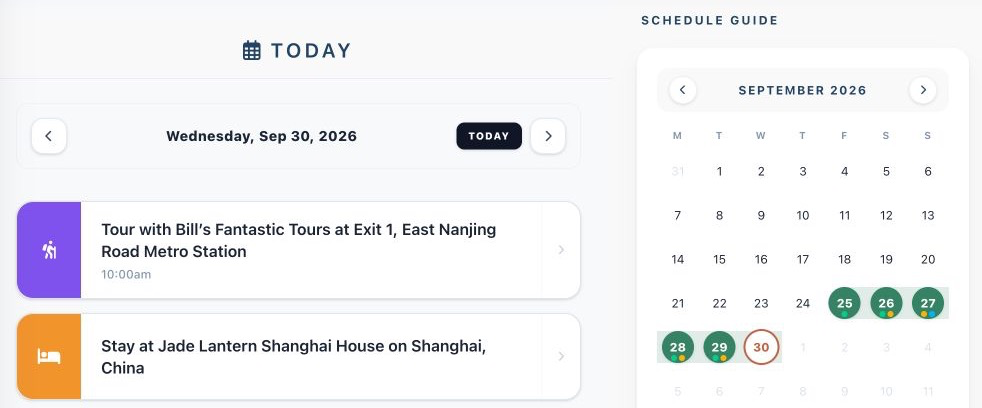
Cruisers can organize embarkation day logistics on Suitcase2Go. You can gather your pre-cruise flights, hotel reservations, and port transfer confirmations into a single trip timeline. Use the Suitcase2Go Chrome extension to link reservations into your active trip, and leverage the Web trip menu to upload boarding passes and transfer receipts into Booking Attachments & Emails so essential documents remain organized before you reach the pier.