
Stepping off an international flight after eight to fourteen hours in the air is rarely glamorous. Even when a flight is smooth, rapid transit across multiple time zones produces an inevitable collision between your internal body clock and the physical world around you. Far too many independent travelers make the mistake of scheduling pre-booked morning museum tours, fast-paced day trips, or ambitious culinary expeditions within hours of touching down.
Building an intentional, low-stress buffer into your initial 48 hours preserves the rest of your trip. By understanding how circadian disruption works, locking in smooth arrival logistics, and pacing your schedule with flexible neighborhood exploration, you can transform what is often a disorienting haze into an enjoyable, grounding transition.
The Physiology of Arrival: Why You Need 48 Hours
To plan an effective arrival buffer, it helps to understand what your body experiences during long-distance transit. When you cross two or more time zones rapidly, your body encounters what public health authorities classify as jet lag disorder—a temporary misalignment between your internal circadian rhythm and the local solar day.
According to the CDC Yellow Book guidance on jet lag disorder, symptoms typically peak within the first 24 to 48 hours after landing. These commonly manifest as daytime fatigue, insomnia during local nighttime, mild gastrointestinal upset, and reduced cognitive focus. The CDC notes a distinct directional asymmetry: traveling eastward shortens your day, requiring a phase advance that typically takes roughly one full day per time zone crossed to adjust. Traveling westward lengthens your day, requiring a phase delay that adjusts somewhat faster (at a rate of about 1.5 time zones per day).
Additionally, spending extended hours in a pressurized, sedentary cabin restricts blood flow. The CDC guidance on travel and blood clot risks notes that prolonged seated immobility during journeys of four hours or more increases venous stasis. Taking light walks immediately post-flight is critical not just for exploring, but for encouraging healthy venous return and shaking off physical stiffness.
As explained by the National Institute of General Medical Sciences on circadian rhythms, your central biological pacemaker—the suprachiasmatic nucleus located in the brain's hypothalamus—relies on environmental light cues received through your eyes to regulate physical, mental, and behavioral cycles. Secondary environmental cues, known as zeitgebers, include meal timing and gentle physical activity. Structuring your first 48 hours around daylight and consistent meal windows provides the fastest biological reset.
Phase 1: Touchdown to Bedtime (Hours 0 to 12)
Your primary objective on arrival day is operational simplicity. Mental bandwidth will be limited, so eliminate decisions before you clear customs.
1. Automate Ground Transit
Do not step off a red-eye flight expecting to navigate an unfamiliar multi-tiered metro map with heavy luggage while managing sleep deprivation. Pre-book an official airport taxi, rideshare, or a direct express train whose ticket you already have ready on your phone. If you are taking mass transit, make sure you have already noted the exact transfer station and destination exit name.
2. Solve the Luggage Gap
International flights often arrive between 06:00 and 11:00, whereas standard hotel check-in rarely opens before 15:00 or 16:00. Wandering a city while towing wheeled bags drains energy rapidly.
- Hotel Drop-off: Head straight to your booked accommodation. Almost all full-service hotels and managed guesthouses will securely hold your luggage before check-in at no charge.
- Station Storage: If your lodging is far outside the center or you are staying at an unstaffed holiday apartment without early bag drop, identify a primary train station left-luggage desk or vetted city locker facility before you fly.
- Freshen Up Quickly: Pack a small, accessible change of clothes (clean socks, a fresh shirt, and basic toiletries) at the top of your carry-on bag so you can freshen up in the hotel lobby restroom before stepping back outside.
3. Seek Daylight and Avoid the Long Nap
Once your bags are safely stored, head outdoors. The NHS jet lag advice emphasizes that spending time outside in natural sunlight is the single most effective intervention to reset your body clock to local daylight. Take a slow, flat stroll through a local park or pedestrian district.
Resist the temptation to crawl into bed at 13:00 for a five-hour sleep. If you are struggling to stay awake safely, take a short power nap capped strictly at 20 to 30 minutes in the early afternoon, using a reliable phone alarm. Sleeping for multiple hours in the middle of the day will cement insomnia for your first night.
Phase 2: Anchoring Night One (Hours 12 to 24)
Night one sets the baseline for the remainder of your trip. The goal is achieving sustained, restorative rest aligned with local hours.
Arrival Evening Checklist:
[ ] 18:30 - Eat a light, nourishing dinner aligned with local meal customs.
[ ] 19:30 - Unpack only essentials; keep luggage clutter contained.
[ ] 20:30 - Dim ambient lights; turn down screens to encourage natural melatonin release.
[ ] 21:30–22:30 - Turn in for sleep in a dark, quiet, climate-controlled room.
[ ] 07:30 - Set a firm morning alarm to avoid sleeping past midday.
Align Meals with the Clock
Eat dinner at the standard local time (typically between 18:30 and 20:30, depending on the region). Avoid heavy, greasy meals or excessive alcohol, both of which impair sleep architecture and worsen dehydration. A balanced, protein-rich or complex-carbohydrate meal signals your digestive system to sync with the local time zone.
Optimize the Sleep Environment
Hotels often feature unfamiliar climate controls or light leaks. Close blackout drapes completely, set the room temperature to a cool setting (around 18°C to 20°C / 65°F to 68°F), and use earplugs or a white noise app if your room faces busy urban streets. Set an alarm for standard morning hours (such as 07:30 or 08:00). While waking up might feel groggy, prolonged sleeping past noon will disrupt your circadian rhythm for days.
Phase 3: The Low-Cognitive Day Two (Hours 24 to 36)
Day two is where many itineraries falter. Travelers wake up feeling moderately refreshed, assume jet lag has been conquered, and overload their schedule with museum queues, fast transit, and reservations. In reality, circadian adjustment is still underway.
What to Schedule
- Neighborhood Wandering: Pick one compact, walkable neighborhood near your accommodation. Wander streets at your own pace without a rigid checklist.
- Open-Air Attractions: Botanic gardens, historic plazas, open waterfront promenades, and outdoor street markets keep you immersed in natural daylight, reinforcing circadian phase adjustment.
- Café Culture: Schedule intentional 45-minute pauses at local cafés to sit, hydrate, observe local life, and rest your legs.
What to Avoid
- High-Stakes Timed Tickets: Avoid pre-booking non-refundable tickets for vast cultural institutions (such as the Louvre, Vatican Museums, or the Metropolitan Museum of Art) on Day Two. Prolonged standing in dim indoor galleries exacerbates physical fatigue and brain fog.
- Lengthy Multi-Leg Transit: Do not book day excursions that require catching early connecting regional trains or driving unfamiliar highway routes.
Phase 4: Consolidating Recovery (Hours 36 to 48)
By the afternoon and evening of Day Two, your body will have adapted significantly. The final 12 hours of the initial 48-hour window should bridge the gap between active rest and full-speed travel.
| Time Window | Core Focus | Operational Action |
|---|---|---|
| Morning (Hours 24–28) | Sunlight & Movement | Light breakfast; 60–90 minute walk in a sunlit outdoor area. |
| Midday (Hours 28–32) | Local Rhythms | Eat a full lunch at a local bistro; rest at lodging if necessary. |
| Afternoon (Hours 32–36) | Low-Demand Sightseeing | Visit a small local gallery, historic library, or bookstore. |
| Evening (Hours 36–42) | Casual Dining | Relaxed dinner reservation; review upcoming multi-day plans. |
| Night (Hours 42–48) | Second Consolidated Rest | Normal bedtime; body clock now aligned for Day Three adventures. |
A Worked Example: London to Tokyo Arrival
To see how this framework operates in practice, consider a traveler flying from London Heathrow (LHR) to Tokyo Haneda (HND), crossing eight time zones eastward.
- 08:30 (Day 1 - Arrival): Flight lands at Haneda. After immigration and customs, the traveler collects an IC transit card, avoids the rush-hour local trains by taking an airport limousine bus directly to their hotel area in Shinjuku, and drops bags at the front desk by 10:30.
- 11:00–14:00 (Day 1 - Sunshine Reset): Instead of attempting the dizzying crowds of Shibuya Crossing, the traveler walks quietly through Shinjuku Gyoen National Garden under open skies, stops for a light lunch of udon nearby, and drinks plenty of water.
- 15:00 (Day 1 - Check-In): The traveler checks into their room, takes a brief 20-minute rest to decompress, unpacks toiletries, and takes a refreshing shower.
- 18:30 (Day 1 - Dinner & Bedtime): Early dinner at a quiet neighborhood ramen shop within a five-minute walk of the hotel. Back in the room by 20:00, blackout curtains drawn, in bed reading by 21:30. Lights out at 22:00.
- 07:30 (Day 2 - Awakening): Alarm sounds. The traveler wakes up with mild fatigue, pulls open the drapes immediately to let morning sunlight enter, and eats breakfast at 08:30.
- 10:00–16:00 (Day 2 - Gentle Exploration): The day is spent exploring Meiji Jingu shrine’s forested walking paths and wandering through surrounding residential side streets. No timed bookings, no rush. By dinner on Day Two, the traveler is fully stabilized and ready to tackle ambitious excursions starting on Day Three.
Practical Trip Planning with Suitcase2Go
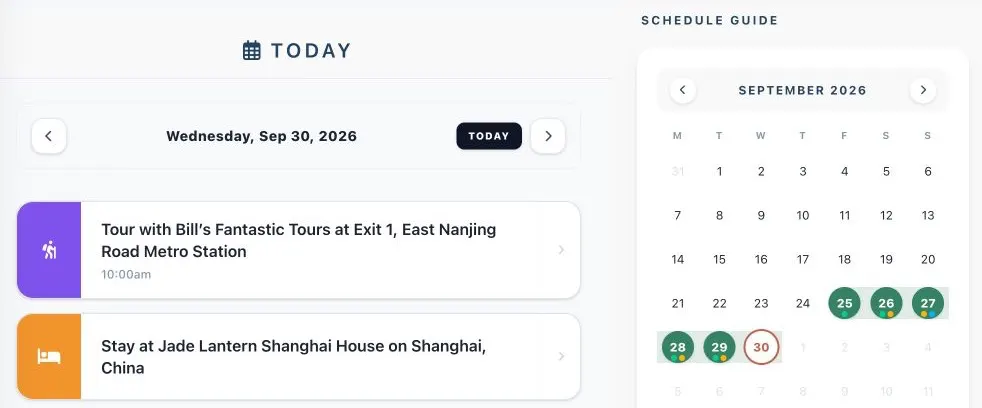
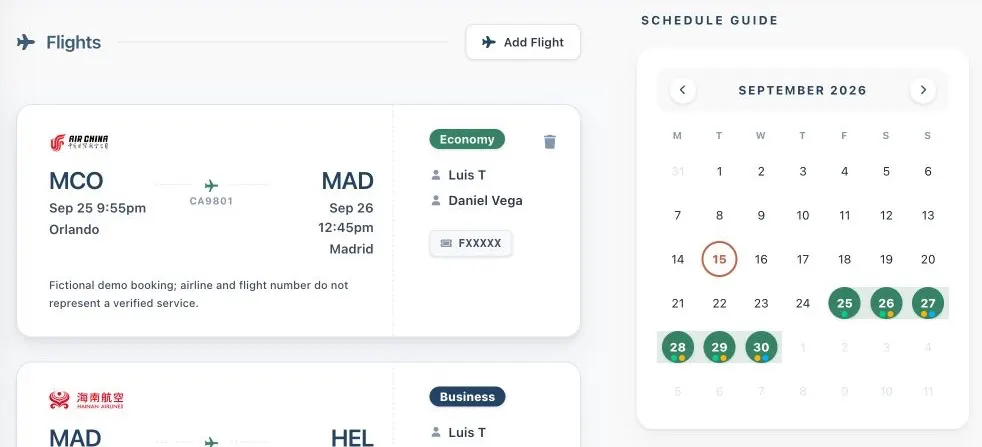
When designing an itinerary across multiple time zones, keeping your daily schedule clear and realistic is essential. Suitcase2Go helps you organize your flights, stays, and daily plans in one centralized place so you can visualize realistic transit buffers before you leave home.

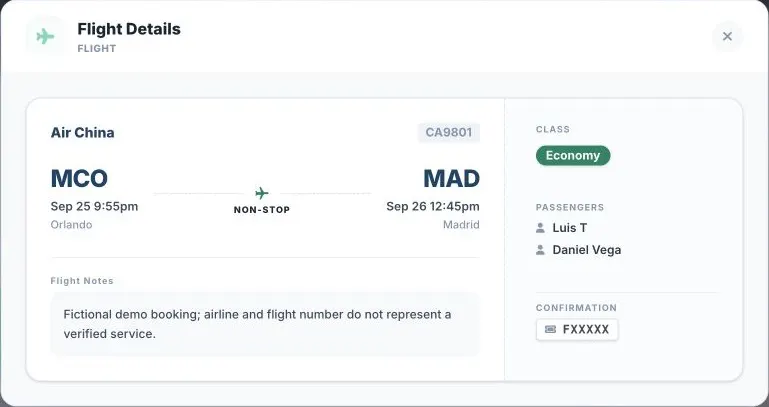
You can use the Chrome extension to add your travel confirmations to your target trip, verify the booking entries against your actual reservation details, and build flexible daily schedules that leave arrival days open for recovery. Whether you need to attach hotel confirmation PDFs or share your travel outline with travel companions by email, organizing your logistics ahead of time means you can spend your first 48 hours resting rather than sorting through lost confirmation numbers.
By treating your arrival as a dedicated phase rather than a sprint, you protect the health, mood, and momentum of your entire trip.