
A 6:00 AM flight departure often sounds manageable until you reverse-engineer the morning. Accounting for boarding schedules, security queues, and bag-drop deadlines, you generally need to step onto the airport curb between 3:30 AM and 4:30 AM. In most major metropolitan areas, high-speed rail lines, express airport trains, and primary subway lines halt operations between roughly 00:30 AM and 5:00 AM.
Navigating that transit gap requires a proactive strategy. Relying on an app dispatch at 3:15 AM without understanding regional driver supply or checkpoint hours can leave you stranded. This guide breaks down the core ground transportation options available during early morning hours, the hidden operational limits of airport terminals, and how to structure a failsafe transfer plan.

1. Pre-Booked Rideshare: Policies, Mechanics, and Limits
Many travelers assume that pre-scheduling a ride in an app is an absolute guarantee that a vehicle will arrive on their doorstep at 3:45 AM. In reality, both Uber and Lyft treat advance bookings as automated dispatch orders matched against available local driver supply.
Uber Reserve Rules
With Uber Reserve, passengers can schedule airport pickups from 30 minutes up to 90 days ahead. Key operational terms include:
- Built-In Courtesy Wait: Uber Reserve includes extra wait time once the vehicle arrives—typically 5 minutes for standard economy rides and up to 15 minutes for premium tiers like Uber Black.
- Cancellation Policy: You can cancel for free up to 60 minutes before your scheduled pickup window. If you cancel less than 60 minutes prior and a driver has already accepted the trip, a cancellation fee applies.
- Dispatch Window: While the system attempts to pair you with a confirmed driver hours ahead of time, dispatch depends on active drivers operating in your specific zone.
Lyft Scheduled Rides Rules
Similarly, Lyft Scheduled Rides allow passengers to book up to 30 days in advance:
- Cancellation Window: Edits and cancellations are free up to 1 hour before pickup. If canceled within the final hour after a driver has accepted, standard cancellation fees are charged.
- Driver Acceptance Limitations: As Lyft notes in its official support documentation, driver availability varies by time and region. A scheduled ride in an outer suburb or rural pocket does not physically force an off-duty driver onto the road.
The Operational Takeaway: If you live in an exurban area, a low-density neighborhood, or a smaller regional market, do not rely exclusively on on-demand rideshare apps for departures before 5:00 AM. In those regions, booking through a traditional local taxi dispatch or an established airport car service with a dedicated fleet offers higher dispatch accountability.
2. Dedicated Night Buses and 24/7 Transit Corridors
Standard express transit (such as London's Heathrow Express or typical regional commuter rail) usually shuts down overnight. However, major transportation authorities frequently maintain secondary surface transit networks.
- London (TfL): While the Elizabeth line and non-weekend Piccadilly line stop running in the early hours, Transport for London (TfL) operates dedicated 24-hour and all-night bus routes connecting outer boroughs to Heathrow Central Bus Station, including Route 111 and night bus Route N9. These buses run throughout the night when rail links sleep.
- New York (MTA / PANYNJ): The New York City subway runs 24/7, and the Port Authority’s AirTrain JFK operates continuously throughout the night. However, overnight transit headways widen significantly—often stretching to 15–20 minutes between trains—and planned track maintenance frequently forces detours. Always budget an extra 30–45 minutes if relying on overnight subway connections.
- Continental Europe: Cities like Berlin, Paris, and Amsterdam run dedicated night bus networks (Noctilien in Paris, Nachtbus in German transit systems). These networks do not match daytime train frequencies; departure intervals typically run every 30 to 60 minutes.
Before assuming public transit is impossible, check your local authority’s overnight transit map. If a night bus is viable, confirm the specific night stop location the evening before, as night routes sometimes use different street bays than daytime trunks.
3. Terminal-Connected Stays and Airside Pods
When a 4:00 AM road transfer introduces severe uncertainty—such as during winter weather advisories or major roadwork—relocating closer to the departure gate the evening before can be the most dependable option.

Direct-Access Terminal Hotels
Hotels physically attached to the departure terminals eliminate ground transit risk entirely. Facilities such as the Sofitel at London Heathrow Terminal 5, the Hilton at Terminal 4, or the TWA Hotel at JFK Terminal 5 connect straight to terminal corridors via covered walkways. Heathrow Airport provides dedicated guidelines on its terminal hotels and parking connections, noting that terminal-linked accommodations allow passengers to bypass morning shuttle buses entirely.
Hourly Airside Sleeping Suites
For long layovers or early domestic departures where you can clear security in advance, hourly private suites provide quiet sleep spaces inside secure concourses. For instance, Minute Suites operates hourly sleeping suites at airports including Atlanta (ATL), Charlotte (CLT), and Dallas/Fort Worth (DFW).
- Key Constraint: Minute Suites and similar concepts (such as YOTELAIR in Europe) situated airside require you to be post-security. You cannot reach an airside suite if airport security checkpoints are closed or if your airline check-in counter is not open to accept checked baggage.
- Cancellation Deadlines: Minute Suites requires cancellations at least 3 hours prior for hourly reservations and 12 hours prior for overnight bookings.
4. The Early Morning Bottleneck: Bag Drop and Security Opening Hours
A critical mistake early travelers make is arriving at the terminal at 2:00 AM for a 6:00 AM flight, only to find the building effectively non-operational. Airport terminals do not operate all services around the clock.
| Airport Facility | Typical Operating Hours | What It Means for Travelers |
|---|---|---|
| Airline Bag Drop Desks | Opens 2 to 3 hours before first flight | If you arrive before desks open with checked luggage, you cannot check bags or pass into security. |
| TSA / Security Checkpoints | Opens 03:30 AM to 04:30 AM | Landside ticket halls may be open, but access to airside lounges and gates remains locked until checkpoints staff up. |
| Airside Food & Coffee | Opens 04:30 AM to 05:30 AM | Do not count on full breakfast services or coffee counters during the 3:00 AM arrival window. |
Arriving earlier than 3 hours before a domestic flight often results in waiting on hard benches in the pre-security lobby. Aim to arrive right as the check-in counters or primary security checkpoints open.

5. Structuring Your Early Morning Transfer Plan
To ensure a seamless departure, execute your transfer logistics in four disciplined phases:
Phase 1: Verify Airline & Checkpoint Timelines (48 Hours Out)
Look up your operating airline’s check-in desk opening time and the opening hours of your specific terminal's security screening checkpoints. Align your target arrival window with when these desks actually open, rather than arbitrarily picking 3:00 AM.
Phase 2: Lock In Primary & Backup Ground Transport (24 Hours Out)
- Primary Option: Book an Uber Reserve or Lyft Scheduled Ride, or schedule a confirmed pickup with a reputable local taxi fleet.
- Backup Option: Keep the local taxi dispatch phone number saved in your phone contacts with payment methods verified. Note the exact route and timetable for any municipal night bus running toward the airport corridor.
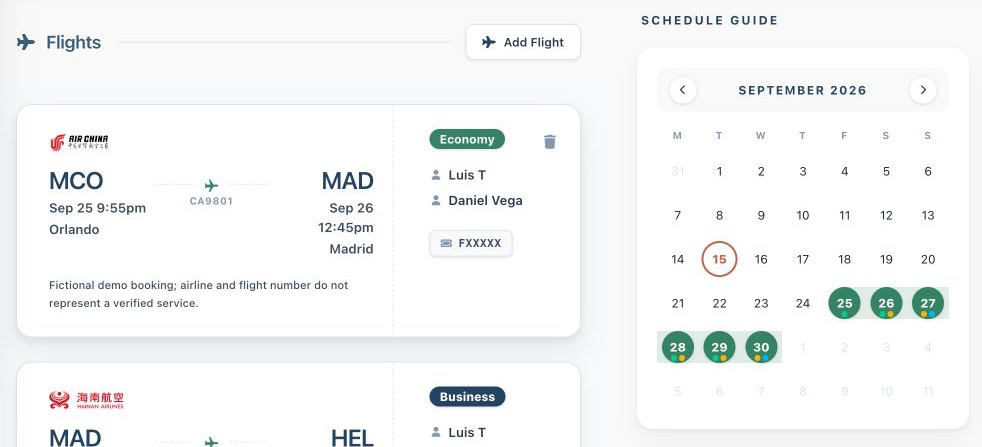
The Suitcase2Go web calendar displays flight and trip items in one unified schedule (shown with local demo data).
Phase 3: Pack and Stage Essentials the Night Before
Stage your luggage, chargers, boarding passes, and outerwear near the front door by 9:00 PM. Set two independent alarms on separate devices—one beside the bed, and one across the room.
Phase 4: Monitor Dispatch 30 Minutes Before Pickup
Check your rideshare application 25 to 30 minutes before your reserved pickup window to confirm that a driver has accepted and is en route. If the system still indicates that it is searching for an available driver 15 minutes before your scheduled departure, immediately switch to your secondary plan (local taxi dispatch or your prepared backup car service).
Keep Your Transfer Details Organized
Early morning travel leaves zero room for frantic inbox searches while standing on a dark curb. If you want to keep your flight confirmation times, terminal notes, hotel reservations, and ground transport details structured in one clean view without hunting through confirmation emails, explore Suitcase2Go to centralize your upcoming trips.