
A common mistake travelers make when organizing a winter getaway is transposing their summer pacing onto cold-weather itineraries. In July, a four-hour afternoon hike followed by a scenic drive leaves plenty of margin before dusk. In December or January, that same timeline puts you on an icy, unfamiliar trail in pitch darkness.
At mid-to-high latitudes, winter daylight drops dramatically. According to data compiled by the U.S. National Park Service for Mount Rainier National Park, a summer solstice can yield nearly 16 hours of usable daylight, whereas the winter solstice shrinks daylight down to around 8 hours and 25 minutes, with sunrise lingering near 8:00 AM and sunset arriving before 4:30 PM. Compounding this challenge, walking over snow or ice cuts typical hiking speed in half.
Planning around shorter days is not about staying indoors; it is about structuring daily schedules to match the solar clock, building strict safety buffers, and shifting lower-priority sightseeing into the evening hours.

1. Calculate True Daylight and Twilight Windows
Many travelers look only at published sunrise and sunset times on standard weather apps. For logistical planning, this view is incomplete. You need to know two distinct figures: solar noon (when solar radiation and thermal heat peak) and civil twilight (when natural light remains sufficient for visual outdoor travel without artificial illumination).

Using Official Astronomical Calculators
Instead of trusting generalized rule-of-thumb daylight tables, look up exact coordinates for your specific destination using authoritative tools:
- Civil Twilight Boundaries: The U.S. Naval Observatory Complete Sun and Moon Data Tool calculates precise civil twilight, sunrise, solar transit, and sunset for any global coordinate. Civil twilight in the evening ends when the geometric center of the sun is 6 degrees below the horizon—marking the definitive cutoff when daylight navigation becomes unsafe on unlit paths.
- Solar Angles and Thermal Windows: The NOAA Solar Calculator calculates apparent solar noon and elevation angles. In winter, temperatures often drop immediately as the sun approaches the horizon. Knowing your solar noon allows you to schedule strenuous climbs or open-ridge segments during the two-hour window of peak warmth (roughly 11:30 AM to 1:30 PM).
Illustrative Winter Daily Solar Schedule (46°N Latitude)
07:25 AM - Morning Civil Twilight Begins (First usable trail light)
08:00 AM - Official Sunrise
12:15 PM - Solar Noon (Peak thermal absorption and trail visibility)
04:25 PM - Official Sunset (Immediate temperature drop)
05:00 PM - Evening Civil Twilight Ends (Artificial lighting strictly required)
2. Apply the 50 Percent Rule to Outdoor Distances
In fair weather, an average hiker covers 2.5 to 3 miles per hour on moderate trails. When winter conditions introduce packed snow, hidden ice, or slush, that pace easily drops below 1.5 miles per hour—even when wearing microspikes or snowshoes.
As the U.S. National Park Service points out in its winter recreation guidelines, shorter daylight directly limits achievable distances. Travelers should avoid attempting summer mileage during winter excursions.
Logistical Pacing Adjustments
- Cap Daytime Outdoor Routes at 4 to 5 Hours: If your total daylight window between sunrise and sunset is eight hours, reserve a maximum of four to five hours for trail movement. The remaining three hours provide critical margins for vehicle transit, equipment adjustments, photo stops, and unexpected slowdowns.
- Front-Load the Day: Start moving at morning civil twilight rather than waiting for full sun. Arriving at the trailhead at 8:00 AM ensures that an unexpected delay leaves you with hours of daylight ahead, rather than pushing your return into sub-freezing darkness.
- Set a Hard Turnaround Time: Establish a non-negotiable turnaround hour based on your target sunset time. If you plan to finish by 4:00 PM and the route takes three hours in each direction, your turnaround time is 1:00 PM—regardless of whether you reached the destination summit or viewpoint.
3. Structure the Daily Flow: Golden Window vs. Blue Hour
When organizing your daily plan, divide your day into three functional zones: prime daylight, twilight buffers, and darkness hours.

Zone A: Prime Daylight (09:00 AM to 03:00 PM)
Dedicate this block exclusively to outdoor activities that require clear visual footing, scenic viewpoints, open-water ferries, or rural driving on unlit secondary roads. Avoid spending these hours in enclosed museums, seated restaurant lunches, or retail shops that are equally accessible after dark.
Zone B: Twilight Transition (03:30 PM to 05:00 PM)
Use the twilight window to transition from backcountry terrain to your vehicle or base lodging. This is the optimal window for scenic overlooks reachable by paved roads, photography during the extended winter blue hour, or enjoying thermal baths and hot springs where lighting is built-in.
Zone C: Evening Nightlife & Culture (05:00 PM onward)
Shift indoor cultural exploration, museum visits, multi-course dining, and urban walking tours into early evening. Many mountain towns, European historic centers, and northern cities feature extensive architectural illuminations that make evening strolling far more engaging than trying to force daytime walking into freezing late afternoons.
4. Prepare for Sudden Cold and Twilight Transitions
Darkness in winter brings rapid thermodynamic drops. As daylight fades, ambient air temperatures can plunge by 10 to 20 degrees Fahrenheit in less than an hour, particularly in alpine valleys or dry continental climates.

The National Weather Service Winter Weather Safety Program warns that wind chill accelerates heat loss significantly once natural sunlight subsides. When you pack your daypack, build your equipment list around the reality that your trip might extend past twilight:
- Dedicated Headlamps per Person: Never rely on a smartphone flashlight, as cold air rapidly depletes lithium-ion smartphone batteries. Carry a dedicated headlamp with lithium primary cells or a power bank stored in an interior pocket close to body heat.
- Insulating Layer Reserves: Pack a heavy fleece or packable down parka at the bottom of your pack, reserved strictly for emergencies or stops, rather than wearing your warmest gear while actively sweating on an uphill climb.
- Thermal Hydration Protection: Uninsulated water bladders and hose nozzles frequently freeze within thirty minutes of twilight in sub-freezing conditions. Use wide-mouth insulated bottles stored inside your pack.
5. Build Worked Contingency Schedules (Plan A vs. Plan B)
Winter conditions demand flexible planning. Mountain passes can close without warning, and unexpected squalls can reduce visibility to near zero.
Here is how to structure a worked contingency plan for a winter day trip:
Worked Sample Day: Winter Mountain Basin
| Time Window | Plan A (Optimal Daylight & Clear Roads) | Plan B (Low Visibility / Early Trail Closure) |
|---|---|---|
| 07:30 - 08:30 AM | Drive to alpine trailhead at first light | Local café breakfast; monitor road closure feeds |
| 08:30 - 01:30 PM | 5-mile snowshoe circuit; reach lake basin by noon | Low-elevation forest nature trail (flat, marked path) |
| 01:30 - 03:30 PM | Return leg to trailhead; depart before 3:30 PM | Regional indoor maritime or alpine museum visit |
| 03:30 - 05:00 PM | Scenic highway drive back to town during dusk | Soak at local hot springs / indoor wellness pool |
| 05:00 PM Onward | Dinner in town, gear drying, evening town walk | Fireplace dining, board games, local theater |
Having a structured Plan B ensures you do not waste precious midday hours scrambling to decide what to do when foul weather or an icy road cancels your original route.
6. Keeping Your Daily Schedule Cohesive
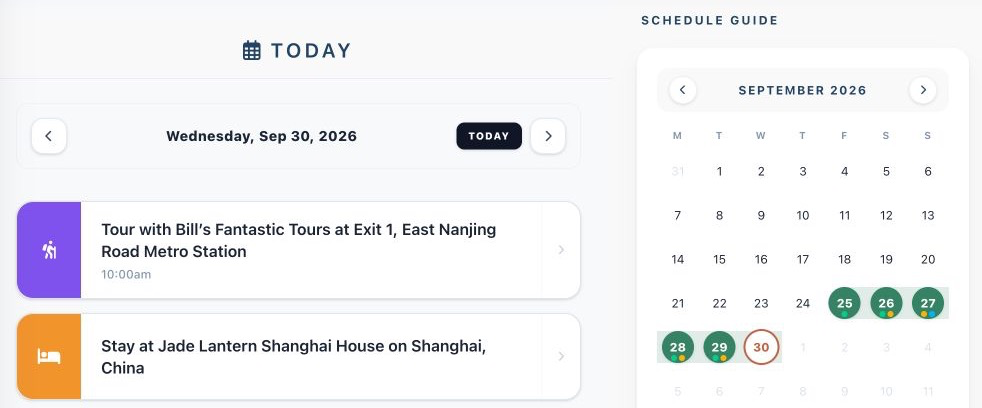
Juggling tight solar schedules, equipment checklists, hotel check-ins, and daylight-dependent bookings can quickly become complicated. Rather than relying on scattered browser bookmarks or disorganized confirmation emails, keeping your timeline in a dedicated travel platform keeps your plans clear and actionable.
With Suitcase2Go, you can organize your daily activities, flights, and accommodations in one central itinerary. Using the web tools, you can review your schedule by day, add booking attachments and confirmation documents, and easily print out physical backup copies to keep in your pack when venturing into areas with spotty cell reception or battery-draining cold.
Plan with the sun, budget generous time margins, and respect winter twilight cutoffs—you will find that cold-weather travel offers some of the clearest skies and most memorable scenery of the year.