
Every group trip starts with high energy until the discussion hits an unmoderated group chat. What begins as enthusiastic brainstorming quickly degenerates into twenty-message debates over dinner spots, passive non-answers ("I am fine with whatever!"), and silence when it is time to put down a deposit. This condition—itinerary paralysis—happens when a group confuses open brainstorming with decisive planning.
Without a structured workflow, the burden of organizing either collapses onto one frustrated volunteer or the entire vacation remains unbooked. Moving from an initial idea to a confirmed booking requires establishing clear decision stages, narrowing options before polling, setting hard deadlines, and separating collaborative wishlists from the final master schedule.

Here is a practical, step-by-step framework to guide your group from initial interest to a fully locked itinerary.
The Root Causes of Group Itinerary Paralysis
Group planning stalls primarily because travelers treat every decision as an open-ended, unanimous consensus. In reality, four systemic flaws derail most shared trips:
- The Consensus Trap: Insisting that all participants agree on every meal, departure time, and museum visit guarantees friction. Different travel paces clash when groups attempt to stay attached at the hip for 16 hours a day.
- The Passive Participant Dilemma: When someone replies "whatever the group wants," they intend to be flexible, but they actually push cognitive labor onto others and delay final decisions.
- Financial Ambiguity: People feel uncomfortable setting hard spending caps in public chat threads. Without a verified spending baseline, lodging proposals stall because prices are either too high for some or underwhelming for others.
- Unbounded Channels: Scattering flight links across WhatsApp, hotel bookmarks across Instagram, and restaurant lists across text messages scatters critical details across multiple apps.
To overcome these hurdles, structure the planning cycle into five consecutive phases: alignment, constraint locking, shortlist voting, primary reservation, and daily schedule architecture.
Phase 1: Lock Availability and Budget Anonymously
Never ask an open-ended question like "When should we go?" or "What is everyone's budget?" Broad questions produce scattered answers. Instead, establish hard constraints first.
Step 1: Narrow Departure Windows
The trip initiator should select two or three viable calendar windows based on seasonality and major holidays. Use a scheduling tool like Doodle Group Poll to gather availability. Doodle allows organizers to propose specific date blocks where participants vote on their availability via a single shared link without needing to register an account. Set an explicit voting cut-off date (such as 72 hours) and clearly state that the window with the greatest overlap wins.
Step 2: Establish the Individual Spending Floor
Financial constraints must be set before any accommodation searches begin. To avoid awkwardness, have members submit their target nightly budget band privately to the lead organizer or via a brief private form. The trip's baseline lodging budget is set by the lowest common denominator, not the average. If three travelers can afford $300 per night but one can only afford $100 per night, your group search limit is $100 per person per night.
Phase 2: Assign Clear Operational Roles
A group trip is an exercise in distributed project management. Appoint specific roles before anyone starts bookmarking activities:
- The Anchor (Logistics Lead): Keeps the master timeline, monitors deadlines, and ensures reservations do not conflict. This person does not dictate what the group does; they simply manage the process.
- The Treasury Lead: Tracks shared balances, upfront payments, and post-trip reimbursements using expense-sharing software like Splitwise. Splitwise's "Simplify Debts" feature consolidates group tabs and restructures repayment chains within a single currency to minimize the total number of peer-to-peer transfers.
- The Scout Lead: Collects activity recommendations and pins them to a collaborative map or shortlist.
Giving each person a defined responsibility prevents one individual from feeling exploited while ensuring administrative tasks are not forgotten.

Phase 3: Run Structured Shortlists Instead of Open Brainstorming
The most critical rule of group planning is Curate Before You Poll. Never send a group chat fifty raw links. The Scout or Anchor should research and present no more than three curated lodging options that strictly meet the agreed-upon budget and location parameters.
+--------------------------------------------------------------------------+
| WORKED EXAMPLE: LODGING SELECTION MATRIX                                 |
| Target: 4 Travelers | Budget: Max $350/night total | Location: Central   |
+--------------------------------------------------------------------------+
| Option A: 2-Bedroom Apartment                                            |
| - Total: $310/night ($77.50/person)                                      |
| - Trade-off: 1 full bath, walk to transit, laundry in unit               |
+--------------------------------------------------------------------------+
| Option B: Boutique Aparthotel                                            |
| - Total: $340/night ($85/person)                                         |
| - Trade-off: 2 full baths, daily housekeeping, 15-min metro to center    |
+--------------------------------------------------------------------------+
| Option C: Outer Borough Townhouse                                        |
| - Total: $260/night ($65/person)                                         |
| - Trade-off: 3 private bedrooms, spacious yard, 35-min commute           |
+--------------------------------------------------------------------------+
To manage lodging candidates collaboratively, you can create an Airbnb Collaborative Wishlist. Airbnb allows organizers to save up to 100 listings, invite companions via a shared link, and let logged-in participants leave notes and cast up or down votes directly on each property.
Set a strict 48-hour voting window. Include a default rule upfront: "If you do not vote by Thursday at 6:00 PM, your vote defaults to whatever the majority selects." This eliminates stalling caused by unresponsiveness.

Phase 4: Execute Bookings with Transparent Payment Rules
Booking lodging and group transport is where many group trips fall apart due to payment dynamics. Major platforms require one individual to charge their card for the full checkout amount.
To keep financial transactions seamless:
- Pre-Authorize Commitments: Before the Anchor clicks "Book Now," every traveler must confirm their commitment in writing.
- Log Costs Promptly: The primary payer should immediately log the transaction in your shared ledger. Keep in mind that free tiers of expense apps can have usage caps (such as Splitwise's limit of up to four expense entries per day on free accounts), so log master items like lodging and vehicle rentals promptly.
- Decouple Transit from Accommodations: Require all group members to book their own flights or trains independently within 48 hours of securing the stay. Never ask one friend to float thousands of dollars on personal airline tickets for others.
Phase 5: Build a Flexible Daily Schedule (The 1-and-Done Rule)
Over-scheduling is the quickest way to cause group exhaustion and disputes. Packing every hour with mandatory group activities leads to stress, running late, and resentment.
Adopt the "One Anchor Activity Per Day" rule:
- Morning/Afternoon Anchor (1 Shared Event): Schedule exactly one primary activity that the entire group agrees to experience together (e.g., an architectural walking tour, a museum block, or a boat excursion).
- Buffer Zones: Leave mid-afternoons and late mornings unscheduled for wandering, resting, or individual errands.
- Independent Tracks: Encourage subgroups to split up without guilt. If two people want to explore contemporary art while two prefer visiting a local brewery, let them split up. Rejoin for dinner or evening drinks.
To keep sight of prospective spots without forcing an overly rigid schedule, compile dining and sightseeing ideas using Google Maps Shared Lists. Collaborators with a Google account can add, view, and comment on pinned locations across town, giving everyone a reliable pool of nearby spots whenever free time opens up.
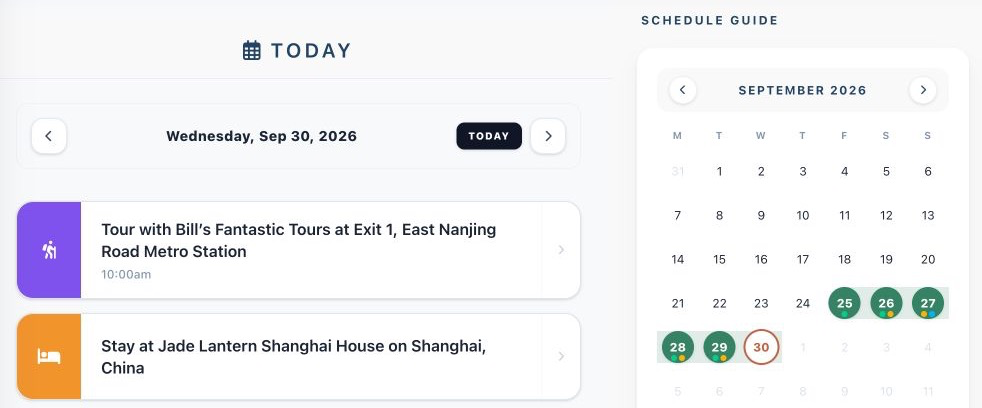
When finalizing daily plans, centralize flight times, lodging reservations, and shared anchor activities into a single clean timeline so everyone can check the day's commitments at a glance.
Consolidating the Master Itinerary
Once the foundational elements are booked, end the group chat chaos by assembling all reservations, addresses, check-in codes, and key anchor events into one shared source of truth.
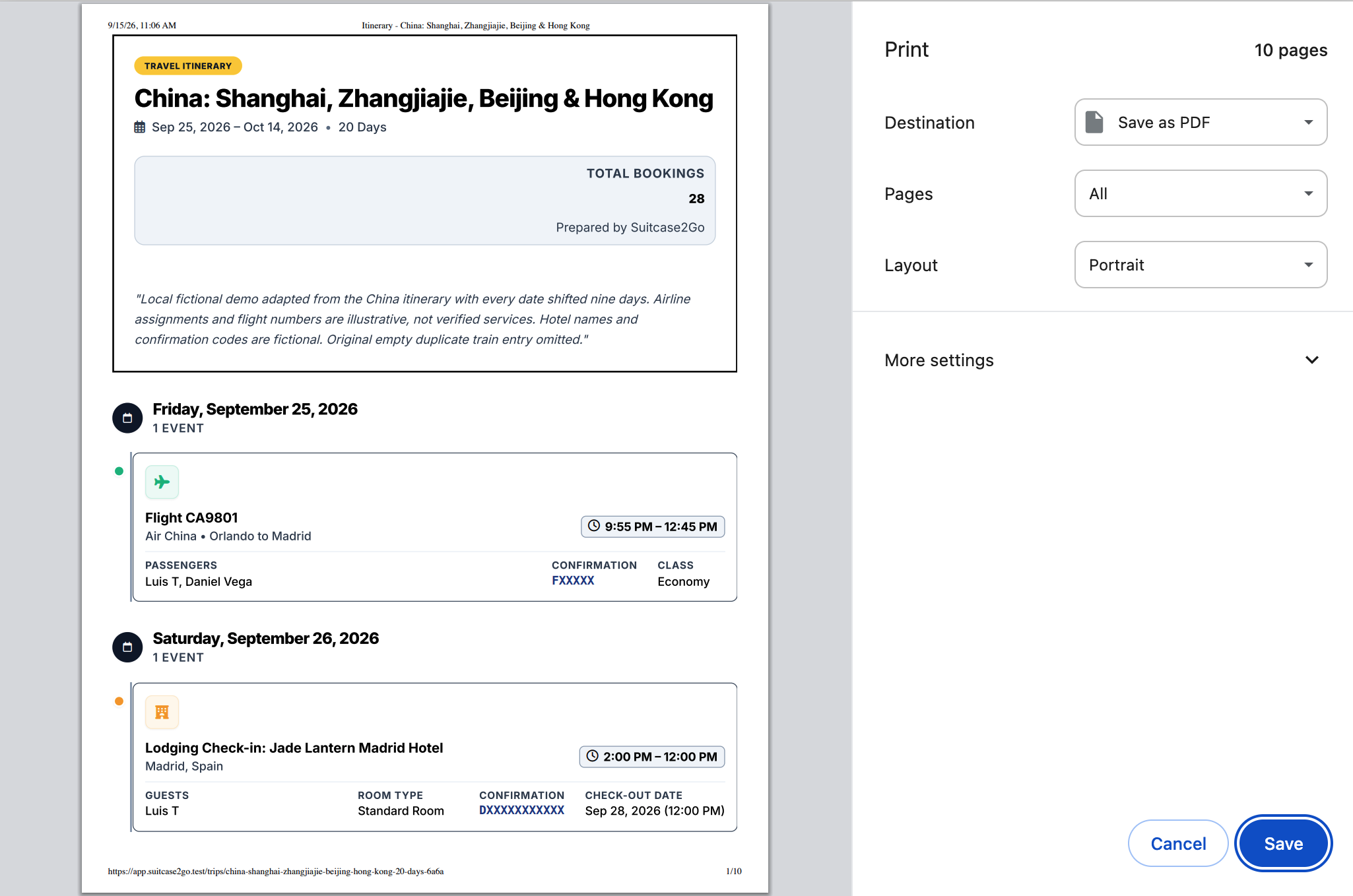
For travelers looking to organize confirmed plans cleanly, Suitcase2Go provides an intuitive platform for centralizing flights, lodging, and daily activities in one unified view. The Suitcase2Go Web trip menu includes practical collaboration tools: you can use Share Trip to send an email invitation to your travel companions with specific viewing permissions, upload key confirmation documents under Attachments, and even use Print Trip to open the browser print dialog and save a clean PDF copy for your traveling party.
The Manual Alternative
If your group prefers not to use an itinerary platform, designate the Anchor to create a shared cloud spreadsheet. Include columns for Date, Time, Activity/Reservation, Confirmation Code, Cost, and Primary Payer. Export the final sheet as an offline document or PDF so all members have local access on their phones without relying on international cellular data.
Summary Checklist: Your Anti-Paralysis Action Plan
- Dates: Run a constrained 3-choice poll via Doodle with a 72-hour deadline.
- Budget: Solicit anonymous maximum lodging limits; set the group threshold to the lowest number.
- Roles: Designate an Anchor (timeline), a Treasury Lead (expenses), and a Scout (shortlists).
- Lodging: Scout curates 3 verified options; group votes via an Airbnb Collaborative Wishlist within 48 hours.
- Shared Ledger: Treasury Lead logs major upfront bookings in Splitwise to streamline reimbursements.
- Schedule: Plan only one anchor event per day; organize flexible options using Google Maps Shared Lists.
- Master Itinerary: Centralize confirmed bookings and daily plans on Suitcase2Go or a shared offline spreadsheet before departure.