
Embarking on a multi-week, multi-city journey with only a carry-on suitcase requires more than disciplined packing; it demands an intentional laundry rhythm. When itineraries cross multiple stops, packing two weeks of clothing quickly turns transit days into an exhausting struggle with overweight luggage and tight train connections. By shifting from packing for the duration of the entire vacation to packing for a rolling cycle of five to seven days, travelers can move light and fast.
However, laundry breaks rarely succeed when left to chance. Wandering unfamiliar city streets in search of coins or discovering too late that an accommodation possesses a washer but no dryer can disrupt an entire sightseeing schedule. This guide breaks down the mechanics of plotting laundry stops into your itinerary, selecting reliable facilities, managing carry-on detergent regulations, and building an automated packing buffer.

The Core Principle: The 5-to-7-Day Reset Rhythm
Extended trips work best when broken down into manageable clothing cycles. A standard rolling cycle requires five to seven days of base garments (underwear, socks, breathable base layers) plus two outer layers that can be worn multiple times between washes. To maintain this without emergency handwashing under poor drying conditions, plan a dedicated laundry intervention every five to six days.
The Anchor Stop Rule
Never schedule a critical laundry session during a one-night transit stop. One-night stays present distinct logistical hazards:
- Unpredictable Drying Times: European and Asian combination washer-dryer units frequently require three to four hours to dry a single load, and in many rental apartments, only a folding clothes rack is provided.
- Transit Pressure: If a cycle runs late or clothes remain damp at checkout, packing wet garments into compression cubes creates mildew and odor risks within hours.
- Lost Leisure Time: Spending your only evening in a destination supervising a wash cycle at a public laundromat sacrifices valuable travel experience.
Instead, establish an Anchor Stop: a stay of at least two consecutive nights where your mid-trip schedule allows downtime. Washing clothes on the evening of your arrival at an Anchor Stop guarantees a full 24-hour buffer for air-drying before the next packing event.
Step 1: Mapping Out Your Multi-City Itinerary Buffer
When organizing multiple transport legs and hotel stays, identifying which city serves as your washing depot prevents logistical friction. Group your cities into cycles and flag the lodging that will handle the chore.
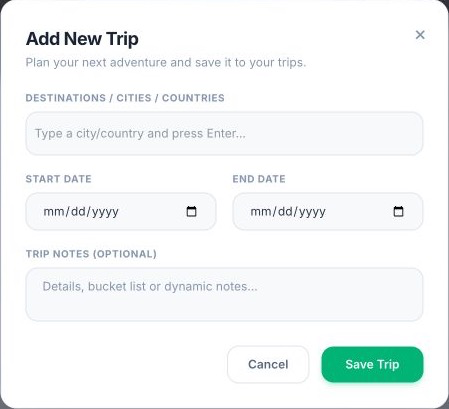
The trip creation workflow allows travelers to map multi-city dates and plan multi-night hubs before locking in reservations (Suitcase2Go demo interface).
When mapping out your travel dates using planning tools such as Suitcase2Go, evaluate every stop with three or more nights as an optimal laundry node. In your daily plans, mark the afternoon or evening of day two at that destination as a rest and maintenance block.
Worked Example: A 16-Day Multi-City Itinerary
Consider this realistic travel sequence to see the rhythm in practice:
- Days 1–3: City A (3 nights). Fresh clothes packed from home. No laundry required.
- Days 4–5: City B (2 nights). End of first clothing rotation.
- Days 6–9: City C (4 nights — Anchor Stop 1). Laundry scheduled for the evening of Day 6 or morning of Day 7. All garments washed, dried, and repacked by Day 9.
- Days 10–11: City D (2 nights). Second rotation active.
- Days 12–15: City E (4 nights — Anchor Stop 2). Secondary wash scheduled on Day 12 to prepare clean apparel for the final stretch and transit home.
- Day 16: Transit Day. Departure with minimal unwashed clothing.
Step 2: Choosing the Right Laundry Facility Strategy
Not all laundry setups offer the same speed or predictability. Depending on your destination and accommodation type, select the method that best matches your budget and schedule.

| Facility Type | Average Turnaround | Cost Level | Reliability / Friction Point |
|---|---|---|---|
| Extended-Stay Hotel Guest Laundry | 1.5 – 2.5 hours | Low to Free | High convenience; dedicated washers and dryers on site. |
| Rental Apartment In-Unit Washer | 4 – 12 hours | Free | Variable drying; European combos dry slowly; racks require ambient airflow. |
| Local Self-Service Laundromat | 1.5 – 2 hours | Moderate | Requires cash/local payment app; requires sitting with machines. |
| Drop-Off Service (Wash-and-Fold) | 12 – 24 hours | Moderate to High | Convenient; risk of shrinkage or delays over weekends/holidays. |
| In-Room Sink / Wash Bag | 15 mins wash, 12+ hrs dry | Zero | Ideal for socks/underwear; limited to lightweight, quick-dry fabrics. |
1. Extended-Stay Brands with Dedicated Facilities
If your trip mixes conventional hotels with extended-stay lodging, position extended-stay properties at your mid-trip milestones. Brands designed for prolonged stays standardize self-service guest launderettes.
For instance, IHG standardizes free self-service washers and dryers for guests across its Candlewood Suites extended-stay properties, keeping machine usage free around the clock while sundries are sold in on-site pantries. Similarly, Hilton incorporates self-service laundry into its Home2 Suites Spin2 Cycle facilities, positioning commercial washers and dryers directly adjacent to fitness centers so guests can combine workouts with maintenance tasks. When booking international hotels, inspect the amenities list for "guest laundry facility" rather than merely "dry cleaning/valet laundry," which charges per garment.
2. Vacation Rentals: Scrutinize the Listing Filters
Booking apartments through platforms like Airbnb allows you to wash clothes while cooking dinner or relaxing, but filtering correctly is vital. According to the Airbnb Help Center on amenity search filters, travelers can select filters under "Bedroom and laundry" specifically for Washer, Dryer, and Drying rack for clothing.
Pay close attention to geographic quirks:
- The "Dryer" Distinction: In many European, East Asian, and Mediterranean apartments, a listed "dryer" is frequently an all-in-one condensing unit or simply refers to an outdoor clothesline or indoor drying rack. Verify whether a vented tumble dryer is present by reading host reviews or messaging them directly.
- Cycle Durations: Front-loading European washing machines frequently run eco-cycles lasting two to three hours. Check machine manuals or translate cycle labels via phone camera to find "Speed 30" or "Express Wash" modes.
3. Urban Public Laundromats (Laveries / Lavanderías)
In dense city centers where your boutique hotel lacks facilities, an urban laundromat provides heavy-duty commercial machines.
- Payment Systems Vary: Do not assume contactless cards or mobile apps will work universally. While modern urban launderettes increasingly use central touch-screen kiosks accepting credit cards, many independent laundromats worldwide still require exact coins or local smart cards. Keep local small change or small bills on hand.
- Detergent Dispensers: Most feature vending machines for single-dose soap, but instructions are often in the local language only. Look for words like Soupline or Suavizante (fabric softener) versus Lessive or Detergente (soap).
4. Portable In-Room Handwashing
For quick mid-cycle maintenance of base layers, running apparel, and socks, in-room washing avoids hunting for commercial machines altogether. Avoid plugging hotel bathroom sinks, which may harbor bacteria or lack tight-fitting drain stoppers.
Instead, consider a dedicated portable washing solution like The Scrubba Wash Bag. Weighing roughly 150 grams and folding into a compact pouch, it integrates an internal flexible washboard that cleans lightweight garments in roughly thirty seconds to three minutes with minimal water. Keep in mind its material specifications: do not use water exceeding 122°F (50°C), and limit load sizes to two T-shirts, two pairs of socks, and two pairs of underwear to ensure effective agitation.
Step 3: Packing Detergent Without Violating Carry-On Rules
Packing your own detergent prevents skin irritation from unfamiliar fragrances and spares you from hunting for convenience stores late at night. However, packing liquids in carry-on bags introduces regulatory constraints.
Carry-On Security Rules
- Liquids and Gels: Under the TSA Liquids, Aerosols, and Gels 3-1-1 rule, liquid detergents and stain removers must be stored in containers of 3.4 ounces (100 milliliters) or smaller. All containers must fit inside a single, transparent, one-quart resealable bag. Packing several liquid detergent bottles quickly exhausts your liquid allowance.
- Powders and Pellets: According to official TSA guidance for powder or pellet detergent, powders are permitted in carry-on luggage. However, powder containers exceeding 12 ounces (350 mL) require secondary physical inspection and bin screening. Keeping powder packs small avoids checkpoint delays.
- The Optimal Travel Solution: Dehydrated detergent sheets. Because they are completely dry, solid laundry sheets do not count toward your TSA 3-1-1 liquid allowance. They can be slipped into a packing cube without weight penalties, cut in half for handwashing, or dropped whole into commercial washing drums.
Step 4: The Overnight Drying Workflow
If your lodging only offers a washer and an air-drying rack, drying heavy cotton garments within 24 hours can be challenging in humid or poorly ventilated rooms. Maximize drying speed with this systematic procedure:

- The Burrito Towel Technique: Remove the washed garment from the machine or wash bag. Lay a clean hotel bath towel flat, place the damp garment on top, roll the towel tightly around the garment into a cylinder, and walk or press firmly on the roll. The dry terrycloth absorbs up to 70% of residual moisture instantly.
- Optimize Airflow: Hang garments on plastic or wooden hangers rather than draping them folded over a rack rail. Place the drying rack in the direct airflow path of an air conditioner, heat pump, or portable desk fan.
- Fabric Selection: Pack quick-drying synthetic blends (polyester, nylon, elastane) or lightweight merino wool. Avoid heavy loop-back cotton fleece, heavyweight denim, and thick canvas trousers, which frequently take over 24 hours to air-dry indoors.
Practical Checklist for Multi-City Laundry Success
Before departing on your next multi-stop trip, run through these planning checks:
- Audit Your Stops: Identify every stay of 2 or more nights. Assign an Anchor Laundry Stop every 5 to 7 days.
- Confirm Lodging Amenities: Verify whether "dryer" means an electric tumble dryer or an indoor clothes horse.
- Pack Dry Detergent: Stock 6–10 dehydrated laundry sheets inside a zip-top bag in your carry-on luggage.
- Carry an In-Room Contingency: Pack a travel sink stopper or portable wash bag for emergency spot-cleaning.
- Keep Local Currency: Retain several coins or low-denomination banknotes in destination currencies for mechanical laundromats.
- Prioritize Fast-Drying Fabrics: Ensure base layers and socks dry within 8 hours of the towel-roll method.
By treating laundry as an integrated itinerary milestone rather than an afterthought, you can travel indefinitely with a single carry-on, confident that clean clothes are always scheduled into the journey.